+86-158-9507-5134
info@shenchong.com
 EN
EN

Choosing metal coil automatic storage system essentially means selecting a complete solution encompassing "warehousing structure + handling equipment + intelligent control system," rather than individual devices. An inappropriate selection will negatively impact efficiency, safety, and return on investment.
The selection process requires a comprehensive evaluation from multiple dimensions, including production needs, storage structure, level of automation, safety, system software, equipment reliability, and return on investment. Below is a complete and systematic selection guide applicable to automated storage projects for steel coils, aluminum coils, and stainless steel coils.
This is the most crucial step in the selection process; 80% of selection problems stem from unclear requirements.
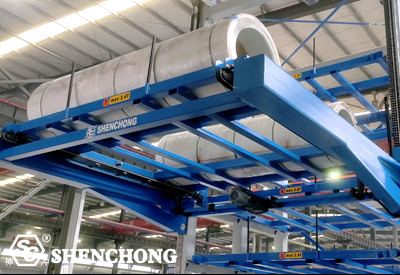
Different coil materials determine the structural design.
- Carbon Steel Coil
- Stainless Steel Coil
- Aluminum Coil
- Copper Coil
- Galvanized Coil
- Inner Diameter: 508/610 mm
- Outer Diameter: 800–2200 mm
- Coil Width: 600–2000 mm
- Weight: 1–30 tons
- Maximum Coil Weight
- Maximum Coil Diameter
- Maximum Coil Width
- Rack Structure
- Pallet Design
- Clamping Method
- Conveying Equipment
Example:
Daily Inbound: 120 rolls
Daily Outbound: 150 rolls
Inventory Cycle
Example: 7 day Inventory
Calculation:
Inventory Quantity = Daily Usage × Inventory Cycle
Example: 150 × 7 = 1050 rolls
- Planned Storage Quantity
- Future Expansion Required
This determines:
- Warehouse Size
- Number of Shelf Layers
- Number of Aisles
- Reserve 20%–30% Expansion Space
- To avoid future reconstruction.
A key indicator in roll material warehouse design.
Classification | Weight |
Light | 1-5 tons |
Medium | 5-15 tons |
Heavy | 15-30 tons |
- Rack Load Capacity
- Stacker Crane Tonnage
- Conveying Equipment
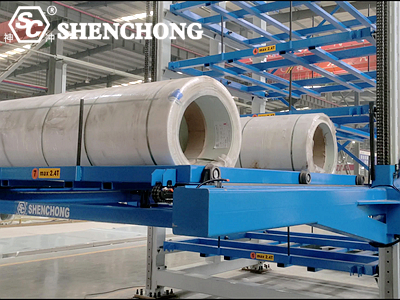
- Minimum Diameter
- Maximum Diameter
For example:
- Ø900–Ø1800 mm
When the diameter varies significantly, the following are required:
- Adjustable Pallets
- Adaptive Fixtures
The level of automation affects investment.
Types | Description |
Semi-automatic | Overhead crane + manual management |
Automatic | Automatic stacking + conveying |
Smart Warehouse | Fully automated + MES linkage |
Automated systems can achieve automatic warehousing, automatic outbound warehousing, and intelligent scheduling.
- Uncoiling Line
- Slitting Line
- Cross-cutting Line
- Stamping Production Line
- Packaging Line
- Conveyor Line
- AGV
- RGV
- Overhead Crane
- Factory height
- Ground load-bearing capacity
- Column spacing
- Fire safety regulations
For example:
Item | Recommend |
Height | ≥12m |
Ground bearing capacity | ≥10 tons/m² |
Span | ≥18m |
Common:
- Overhead crane loading
- Forklift loading
- Automated conveyor line
Higher automation level, higher efficiency.
Common:
- Transport to production line
- Automated delivery
- AGV delivery
This is a key factor affecting the automation structure.
- Number of rolls inbound daily
- Number of rolls outbound daily
- Are there peak periods?
For example:
Frequency | Recommend Solutions |
<50 times/day | Single Stacker Crane |
50–200 times/day | Dual Stacker Crane |
>200 times/day | Multi-Aisle System |
If connected to:
- Leveling line
- Laser cutting production line
- Stamping line
Then the following must be guaranteed: Rapid material supply capability
- WMS warehouse management system
- WCS equipment control system
- ERP interface
- MES interface
This enables full life cycle traceability management of roll materials.
The following equipment must be carefully considered during procurement:
Requirements:
- Load Capacity: 5–30 tons
- Anti-roll design
- Anti-deformation pallets
Common Structures:
- V-type pallets
- Saddle-mounted pallets
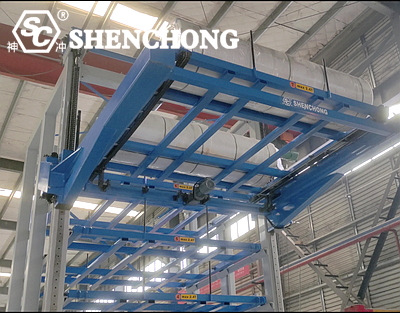
Key Parameters:
Item | Range |
Load Capacity | 5–30 tons |
Speed | 60–120 m/min |
Positioning Accuracy | ±2 mm |
Common:
- Chain Conveyor
- Roller Conveyor
- Turntable
- Lifting Platform
Common Types:
- C-type Lifting Grippers
- Electromagnetic Lifting Grippers
- Hydraulic Clamping Grippers
Identification Methods:
- Barcode
- RFID
- Laser Scanning
Due to the heavy weight of the roll material, safety must be the top priority.
Key Safety Configurations:
- V-shaped Supports
- Anti-roll Blocks
To prevent roll material from rolling off.
Including:
- Laser Collision Protection
- Limit Protection
- Buffer Devices
Equipment Must Be Equipped with:
- Load Detection
- Alarm System
Automated storage must include:
- Safety Fences
- Light Grid Protection
- Emergency Stop System
Automated systems are typically equipped with anti-collision, weight detection, and safety monitoring protection mechanisms.
The following indicators are recommended for evaluation during procurement.
Indicators | Reference |
Storage Density | Increase by 40%-70% |
Inbound Efficiency | 30-60 rolls/hour |
Outbound Efficiency | 30-80 rolls/hour |
Automation Rate | ≥90% |
Inventory Accuracy | 99.9% |
Automated warehousing can save approximately 40-70% of storage space compared to manual stacking.
The price of a roll material warehouse mainly consists of five parts:
- Rack structure
- Stacker crane
- Conveying system
- Software system
- Installation and commissioning
Size | Investment |
Small warehouse | 2 million-5 million |
Medium warehouse | 5 million-15 million |
Large warehouse | 15 million-50 million |
When selecting a supplier, consider the following:
Have they worked with: Steel mills, steel centers, automobile factories?
Can they provide: Warehouse simulation, logistics planning, system integration?
Do they possess: WMS, WCS?
Key: Remote diagnostics, spare parts supply, technical support.
Many companies make the following mistakes when purchasing:
Automated warehouses are long-term investments.
Many project failures are due to software issues.
Warehouses must be integrated with production lines.
Unable to upgrade as future production increases.
Future development directions for coil warehouses:
- AI scheduling system
- AGV intelligent logistics
- Digital twin warehouse
- Unmanned warehousing
- 5G remote monitoring
- This is a crucial point in industry procurement.
- Maximum coil weight?
- Supported coil diameter range?
- Hourly inbound/outbound capacity?
- Does it support ERP/WMS?
- Does it support AGVs?
- Is expansion easy?
- What safety systems are included?
- Failure rate and maintenance cycle?
- Are there any case studies in the steel coil industry?
- After-sales response time?
Selecting an metal coil automatic storage system is essentially choosing a complete intelligent logistics system project, encompassing not only equipment but also warehouse planning, automation level, software system compatibility, and production line integration.
The core logic for selecting an automated metal coil warehousing system is:
Requirements Analysis → Warehouse Planning → Equipment Selection → Software System → System Integration
Principle:
Automated Coil Warehouse = Coil Parameters + Storage Density + Turnover Efficiency + Automated Equipment + Intelligent System
Selection Order:
Coil Parameters → Storage Capacity → Automated Structure → Handling Equipment → Software System
Selecting an automated metal coil storage system requires comprehensive consideration of:
- Coil Specifications
- Storage Capacity
- Inbound/Outbound Frequency
- Warehouse Structure
- Equipment Configuration
- Security System
- Software System
- Return on Investment
Only by achieving:
Equipment + Software + Production Linkage
The true value of automated warehousing can be realized.
Related articles:
SHENCHONG 2828 Automated Metal Coil Storage System 2.4T 7 Layers