+86-158-9507-5134
info@shenchong.com
 EN
EN

With the development of laser cutting technology, sheet fiber laser cutting machines have become essential production equipment in industries such as sheet metal processing, machinery manufacturing, automotive parts, elevators, home appliances, kitchenware, power equipment, construction machinery, and aerospace.
Compared to traditional plasma cutting, flame cutting, and machining methods, fiber laser cutting offers advantages such as high speed, high precision, small heat-affected zone, good cut quality, high automation, and high material utilization.
However, to truly maximize the performance of a fiber laser cutting machine, simply owning a high-configuration device is far from sufficient. Operators must also master scientific cutting processes, reasonable parameter settings, and standardized equipment maintenance methods. The following will comprehensively analyze the usage techniques of sheet fiber laser cutting from multiple perspectives.
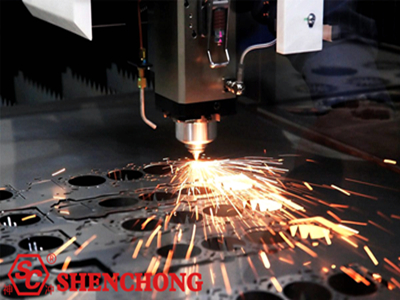
Before starting sheet fiber laser cutting machine each day, check the following:
- Laser operating status
- Chiller temperature
- Coolant level
- Air compressor pressure
- Gas pressure
- Guide rail lubrication status
- Laser head protective lens
- Nozzle damage
- Ceramic ring integrity
Especially the protective lens. Severe contamination will directly affect cutting quality.
Recommendation:
Check the protective lens at least once per shift.
Many cutting problems actually originate from the sheet material.
Focus on checking:
- Rust
- Oil stains
- Coating
- Smoothness
- Oxygen layer
- Wave deformation
For example:
Severe oil stains on the surface of 304 stainless steel will cause:
- Increased slag
- Yellowing of the cut
- Abnormal sparks
Therefore:
It is best to clean the sheet material before cutting.
Different materials require different nozzles.
Materials | Nozzle Specifications |
Carbon steel | Single-layer Nozzle |
Stainless steel | Double-layer Nozzle |
Aluminum plate | Double-layer Nozzle |
Copper plate | Double-layer Nozzle |
Nozzle centering must be calibrated.
Offset exceeding 0.1mm, will affect:
- Airflow
- Beam
- Cut quality
Fiber laser cutting isn't just about power.
Many parameters truly affect quality:
Power, Speed, Focal Point Position, Nozzle Diameter, Gas Pressure, Gas Type, Pulse Frequency/Duty Cycle (for some conditions), Drilling Method, Cutting Sequence and Path. Parameter Matching Principles
Simply put:
Low Power: Incomplete cut, slag buildup, rough kerf.
Slow Speed: Excessive heat, wider kerf, edge ablation, slag buildup at the bottom.
High Speed: Incomplete cut, broken edges, localized wire pulling.
Incorrect Focal Point: Slanted kerf, wider at the top than the bottom, or vice versa, increased burrs.
Inappropriate Gas Pressure: Blackened kerf, poor slag removal, molten slag adhesion.
Therefore, the recommended order for process debugging is:
First determine the material and thickness → then determine the gas → then adjust the power → then adjust the speed → then adjust the focal point → finally fine-tune the nozzle and gas pressure.
The assist gas directly determines the cutting quality.
Suitable for: Carbon steel
Features:
Utilizes combustion to increase energy.
Fast cutting speed for thick plates.
Low cost.
Disadvantages:
Easy to cut: Blackening and oxidation
Suitable for: Stainless steel; Aluminum plate; Galvanized plate
Advantages:
Cut: Whitening; No oxidation; Can be directly welded
Requirements:
Best purity:≥99.99%
Pressure: General 12~25 Bar
Suitable for: Thin plates
Advantages:
Lowest cost; No need for large amounts of nitrogen
Common industries:
Advertising industry; Chassis and cabinet; Sheet metal parts
Larger nozzles are not necessarily better, nor are smaller nozzles better.
- Too small a nozzle: Insufficient airflow, poor slag removal.
- Too large a nozzle: Airflow diverges, resulting in a rough cut.
- Misaligned nozzles: Skewed cuts, increased burrs, unstable perforation.
Recommendations:
Check concentricity every time you change nozzles.
If a sudden deterioration in the cut is observed during production, first check for nozzle burn-out or misalignment.
Use different nozzle sizes for thick and thin plates.
Protecting lenses from contamination is a very common source of failure.
Symptoms:
- Power reduction
- Unstable cutting
- Rough cuts
- Frequent alarms
Recommendations:
Regularly check lenses for fogging, black spots, and burn marks.
Avoid using inappropriate wiping methods.
Keep the lens area clean before and after production.
If any abnormality is found, address the lens issue first before adjusting parameters.
Focus position determines the cutting effect.
General rule:
Suitable for: High-speed cutting of thin sheets.
Characteristics: Fineest cut.
Suitable for: Medium to thick plates.
Benefits: More stable cuts
Suitable for: Thick plate cutting.
Able to:
Improve melting efficiency
Improve slag formation
Experience:
Different laser head brands:
Focus settings vary.
Recommendation:
Do not completely copy other people's parameters.
Drilling is a crucial factor affecting efficiency.
Suitable for: Thin plates.
Fastest speed.
Suitable for: Carbon steel over 10mm.
Advantages:
Reduces burst and spatter
Suitable for: Thick plates.
Can Reduce: Heat concentration.
Increasingly adopted by high-end equipment:
First-stage preheating, second-stage drilling, third-stage cutting
Significantly improved drilling quality.
Many people mistakenly believe:
The faster the better.
In reality:
- Too fast can lead to incomplete cut and burrs
- Too slow easily leads to corched edges and slag
Optimal speed judgment: Observe the sparks.
Normal sparks: Evenly downward spray.
If: Spraying after spark test
Explanation: Speed too fast.
If: Spraying before spark test
Explanation: Speed too slow.
Chilling usually comes from:
① Incorrect focus
② Insufficient air pressure
③ Incorrect speed
④ Damaged nozzle
⑤ Lens contamination
Solution:
Check each item one by one.
Usually:
Over 80% of problems come from:
Focus and speed.
Especially when cutting:
Small holes
Sharp corners
Thin strips
Techniques:
Reduce power
Use:
Slow down at corners.
Add:
Lead-in
Lead-out
Avoid:
Heat concentration.
Experience:
Optimal Hole Diameter≥ Plate Thickness.
Example: 6mm Plate
Recommendation: Hole Diameter ≥6mm
Otherwise:
Prone to deformation.
Use:
High-Frequency Pulse Cutting.
Improves:
Roundness.
Sharp corners are most prone to: Burning.
Solution:
Add to CAD: Corner Compensation.
Control System Enable: Corner Compensation.
Micro Joint:
Preserves: 0.2~1mm
Connection Point.
Advantages:
Prevents Part Warping.
Reduces Head Collision.
Suitable for:
Automatic Loading and Unloading.
Proper layout can improve material utilization.
Recommendation:
Use Automatic Nest.
Note:
Ensure parts are oriented in the same direction
Ensure even heat distribution
Cut larger parts first
Cut smaller parts last.
Material utilization can be improved by: 5%–15%.
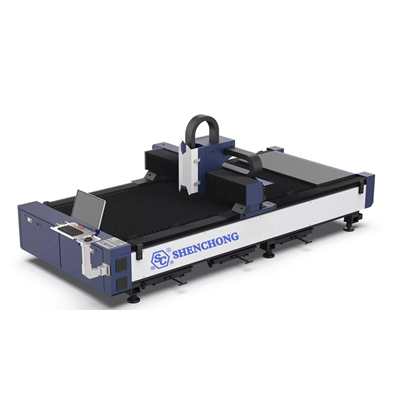
Carbon steel is most commonly cut with oxygen. The key technique lies in controlling the "reaction cutting."
For thick plates, oxygen is preferred due to its high efficiency and strong cutting ability.
For thin plates, high-pressure nitrogen can be used to achieve an oxidation-free cut.
Maintain a stable cutting speed and avoid frequent sudden stops and starts.
Avoid over-burning during piercing to prevent collapse of the piercing opening.
Bottom slag: Slow speed, low focal point, weak gas pressure.
Blackened cut: Insufficient oxygen purity or speed mismatch.
Jerky edges: Plate vibration, nozzle eccentricity, poor guide rail precision.
Stainless steel usually prioritizes appearance, and nitrogen cutting is the most common method.
High nitrogen purity and sufficient pressure are essential.
When aiming for a bright cut, precise focus adjustment is crucial.
Thin plates require careful heat input control to avoid localized overheating.
For complex shapes, reduce speed or use corner compensation at corners.
Yellowing or blackening of the cut: Insufficient air pressure, slow speed, focus deviation.
Drossing at the bottom: Too slow speed or unsuitable nozzle.
Rough cut: Plate deformation, unstable airflow, lens contamination.
Aluminum plates have high thermal conductivity and strong reflectivity, making them more difficult to cut stably than carbon steel.
Prioritize ensuring a stable optical path, anti-reflection protection, and gas flow.
Select appropriate nozzles to avoid excessive airflow dispersion. Focusing should not be arbitrary; multiple trial cuts are usually required. Securely fix the sheet metal to prevent warping due to heat deformation.
Incomplete cut: Insufficient power or excessive speed. Large burrs on the cut: Inaccurate focus or unstable air pressure. Reflective alarm: Poor material surface condition or improper process settings.
The most troublesome aspects of galvanized steel sheet cutting are smoke, dust, splashes, and the effects of the coating.
A powerful exhaust system is essential. Before trial cutting, confirm the coating's impact on the cut and perforation. Frequently check the nozzles and protective lenses. Avoid continuous, dense perforation to prevent localized overheating.
The three biggest concerns in thick plate cutting are: incomplete cut, heavy slag buildup, and large heat deformation.
Drilling should be steady, not rushed.
High gas purity is essential.
Nozzle, focus, and air pressure must be matched.
It's better to be slightly slower than blindly pursuing speed.
When cutting thick plates, slag removal and blowing ability are more important than surface speed.
If the following occurs:
Normal top edge, severe slag buildup at the bottom edge; Unstable, intermittent kerf; Noticeable reddening or deformation of part edges
This usually indicates that the process is not based on stable drilling and slag removal. Prioritize adjusting the drilling method, air pressure, and focus, rather than simply increasing power.
Continuous Cutting:
Heat Accumulation.
Recommendations:
- Skip Cutting
- Island Cutting
- Sectional Cutting
Principles to Follow:
Inner Holes First.
Outer Contours Later.
Reasons:
Avoid: Part Movement.
Modern Laser Machines:
Support: Automatic Edge Finding.
Especially For Scrap Sheets:
Can Save A Significant Amount of Material.
For sheet fiber laser cutting machines to achieve long-term stability, maintenance is more important than machine tuning.
- Clean the workbench and cutting head area.
- Check gas pressure.
- Check cooling water temperature.
- Inspect nozzles and protective lenses.
- Clean up fumes and splatter residue.
- Inspect guide rails, racks, and transmission components.
- Check fume extraction efficiency.
- Check optical path status.
- Verify process parameters for drift.
- Maintain a constant equipment temperature.
- Maintain gas purity.
- Maintain mechanical precision.
- Replace wear parts promptly.
Problems | Causes | Solutions |
Burrs | Focus error | Focus adjustment |
Slag buildup | Insufficient air pressure | Increase pressure |
Burning edges | Slow speed | Increase speed |
Inability to cut | Insufficient power | Increase power |
Abnormal sparks | Nozzle misalignment | Calibrate nozzle |
Rough cut | Lens contamination | Clean lens |
Wipe widening | Nozzle wear | Replace nozzle |
Perforation/burr breakage | Incorrect parameters | Optimize perforation parameters |
Workpiece deformation | Heat concentration | Adjust cutting sequence |
Collision with plate | Part warping | Add micro-connections |
To fully utilize the performance of fiber laser cutting machines for sheet metal, continuous optimization is needed across multiple aspects, including equipment, processes, personnel, and management:
- Establish a standardized cutting parameter library: Establish a process database based on material type, thickness, and power to reduce repetitive debugging time.
- Select appropriate laser power: Avoid using high power for thin sheets or low power for thick sheets, ensuring the equipment always operates within its optimal efficiency range.
- Optimize nesting and cutting paths: Employ intelligent nesting software to rationally plan the cutting sequence, improving material utilization and reducing idle travel.
- Strengthen daily equipment maintenance: Regularly inspect protective mirrors, nozzles, ceramic bodies, guide rail lubrication, and cooling systems to maintain stable equipment operation.
- Maintain a stable auxiliary gas supply: Ensure gas purity and pressure meet process requirements to avoid cutting defects caused by gas quality issues.
- Train operators: Improve their ability to adjust focus points, piercing methods, speed matching, and identify abnormal phenomena, reducing quality fluctuations caused by human factors.
- Utilize intelligent monitoring functions: Fully utilize functions such as automatic edge finding, collision protection, cutting monitoring, and remote diagnostics to improve production continuity and safety.
- Continuous process optimization: Based on the characteristics of different materials and orders, we continuously summarize experience and optimize parameters to achieve the optimal balance between efficiency, quality, and cost.
Summary:
Metal sheet fiber laser cutting is an advanced manufacturing technology that integrates equipment performance, process parameters, material properties, and operational experience. Excellent cutting quality does not solely rely on high-power equipment; it requires systematic management in areas such as focus control, auxiliary gas selection, nozzle status, cutting speed, piercing process, path planning, and equipment maintenance.
For enterprises, establishing comprehensive process specifications and maintenance systems can significantly improve cutting efficiency and processing quality, extend equipment lifespan, reduce production costs, and provide a solid guarantee for intelligent and digital sheet metal processing. Integrating these usage techniques into daily production practices can fully unleash the performance potential of fiber laser cutting equipment, achieving high-efficiency, high-precision, and high-stability processing goals.