+86-158-9507-5134
info@shenchong.com
 EN
EN
Aluminum V Groove is a crucial process in sheet metal fabrication, directly affecting subsequent bending accuracy, appearance quality, and structural strength. Below is a systematic and detailed guide to precautions from multiple perspectives, including materials, processes, equipment, cutting tools, and quality control. This guide is suitable for use in technical solutions or training materials.
Different aluminum alloys exhibit significantly different grooving performance:
- 1-series pure aluminum (e.g., 1050): Good ductility, not prone to cracking, but easily sticks to the tool.
- 3-series (e.g., 3003): Commonly used sheet metal material, good grooving stability.
- 5-series (e.g., 5052): High strength, requires careful control of tool wear during grooving.
- 6-series (e.g., 6061): High hardness, prone to burrs and micro-cracks.
Note: Higher hardness → Higher requirements for tools and processes.
- Clad plate (PE film): Scratch-resistant, but prone to film curling during grooving.
- Oxidized plate: Brittle surface, prone to edge chipping.
- Brushed plate: Grooving direction must coordinate with the texture.
Recommendation: For high-appearance parts, prioritize materials with protective film.
Plate thickness error directly affects:
- Grooving depth control
- Bending angle consistency
Recommendation: Prioritize plates with small tolerances (within ±0.05mm).
- Retain bottom thickness: 0.3 ~ 0.8 mm
- Or proportionally: Retain 10% ~ 20% of the plate thickness
Plate thickness | Recommended groove depth |
2.0mm | 1.4~1.7mm |
3.0mm | 2.2~2.6mm |
4.0mm | 3.0~3.5mm |
Too shallow → High springback when bending
Too deep → Prone to breakage
Common:
90° (Most commonly used)
60° (For small angle bends)
120° (For large angle bends)
Principle:
Groove Angle ≈ Bending Angle
Pointed bottom: Easy to bend, but stress concentration
Round bottom: Better strength, less prone to cracking
High-end products are recommended to use a "micro-round bottom"
Directly affects bending dimensions
Tolerance recommended to be controlled within: ±0.1mm
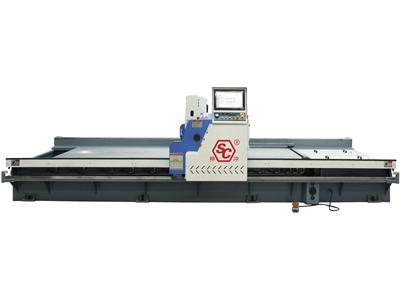
- Horizontal CNC V Grooving Machine
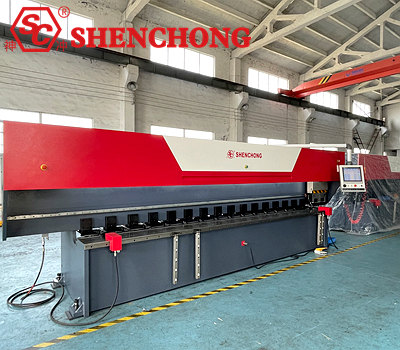
- Vertical CNC V Grooving Machine
- Engraving Machine / CNC
- Laser Slotting (Special Applications)
Unevenness → Inconsistent Depth → Crooked Bending
The sheet metal must be pressed firmly, otherwise:
- Uneven Slot Depth
- Tool Vibration
High-end equipment is recommended to use:
- Full Servo Drive
- Automatic Compensation System
- Carbide Tool
- Diamond Tool (High-end)
- High-speed Steel Tool (Low Cost)
Recommendation: Carbide Tool (Best Cost-Effectiveness)
Tool angles must match the groove angle.
Otherwise:
- Non-standard groove shape
- Large bending angle error
Wear Manifestations:
- Increased burrs at the bottom of the groove
- Surface blackening
- Dimensional deviation
Recommendations:
- Regularly inspect tools
- Establish a tool life table (e.g., machining meters)
Aluminum is prone to tool sticking:
- Use cutting fluid (or a small amount of lubricant)
- Control speed and feed rate
- Select coated tools (e.g., TiAlN)
Grooving Depth = Plate Thickness – Retained Base Thickness
Soft Materials (1 Series / 3 Series): 0.3 ~ 0.5 mm
Medium Materials (5 Series): 0.4 ~ 0.7 mm
Hard Materials (6 Series): 0.6 ~ 1.0 mm
Principle: Harder materials → Thicker grooving depth
Plate thickness (mm) | Recommend groove depth (mm) | Retained base thickness (mm) | Recommend V-groove angle |
1.0 | 0.6 ~ 0.7 | 0.3 ~ 0.4 | 90° |
1.5 | 1.0 ~ 1.2 | 0.3 ~ 0.5 | 90° |
2.0 | 1.5 ~ 1.7 | 0.3 ~ 0.5 | 90° |
3.0 | 2.4 ~ 2.7 | 0.3 ~ 0.6 | 90° |
4.0 | 3.3 ~ 3.7 | 0.3 ~ 0.7 | 90° |
Features:
- Not prone to cracking
- Sticks easily to knives (note lubrication required)
Plate thickness (mm) | Recommend groove depth (mm) | Retained base thickness (mm) | Recommend V-groove angle |
1.0 | 0.6 ~ 0.7 | 0.3 ~ 0.4 | 90° |
1.5 | 1.0 ~ 1.2 | 0.3 ~ 0.5 | 90° |
2.0 | 1.4 ~ 1.6 | 0.4 ~ 0.6 | 90° |
3.0 | 2.3 ~ 2.6 | 0.4 ~ 0.7 | 90° |
4.0 | 3.2 ~ 3.5 | 0.5 ~ 0.8 | 90° |
Features:
- Most stable
- Wide process window (highly recommended)
Plate thickness (mm) | Recommend groove depth (mm) | Retained base thickness (mm) | Recommend V-groove angle |
1.0 | 0.5 ~ 0.6 | 0.4 ~ 0.5 | 90° |
1.5 | 0.9 ~ 1.1 | 0.4 ~ 0.6 | 90° |
2.0 | 1.3 ~ 1.5 | 0.5 ~ 0.7 | 90° |
3.0 | 2.2 ~ 2.5 | 0.5 ~ 0.8 | 90° |
4.0 | 3.0 ~ 3.3 | 0.7 ~ 1.0 | 90° |
Note:
- The risk of cracking is beginning to appear.
- It is recommended to use a "round-bottom cutter" or "secondary grooving".
Plate thickness (mm) | Recommend groove depth (mm) | Retained base thickness (mm) | Recommend V-groove angle |
1.0 | 0.4 ~ 0.5 | 0.5 ~ 0.6 | 90° |
1.5 | 0.8 ~ 1.0 | 0.5 ~ 0.7 | 90° |
2.0 | 1.2 ~ 1.4 | 0.6 ~ 0.8 | 90° |
3.0 | 2.0 ~ 2.3 | 0.7 ~ 1.0 | 90° |
4.0 | 2.8 ~ 3.2 | 0.8 ~ 1.2 | 90° |
Key points to note:
Extremely prone to cracking
Must be controlled:
- Gutter bottom rounding
- Bending direction (perpendicular to the rolling direction)
Bending angle | Recommend groove angle | Description |
90° | 90° | Standard and universal |
60° | 60° | Small angle bending |
120° | 100°~120° | Large angle bending |
Irregular angle | Custom cutting tools | High-end products |
Too fast → Burrs, vibration marks
Too slow → Tool sticking, overheating
Recommendation: Set parameters according to plate thickness
For thick plates (≥3mm): Recommendation: Grooving in 2-3 layers
Prevent: Tool chipping
Rough groove walls
Dry cutting: High efficiency, but prone to tool sticking
Wet cutting: Better surface quality
Recommendation:
Precision parts → Wet cutting
General parts → Dry cutting + air blowing
Prolonged machining → Plate overheating → Deformation
Solutions:
Segmented machining
Intermittent machining
Causes:
- Tool wear
- Feed too fast
Solutions:
- Replace tool
- Adjust parameters
Causes:
- Groove too deep
- Material hardness
- Groove bottom sharp
Solutions:
- Increase bottom thickness
- Use round-bottom cutter
- Change material direction (bend perpendicular to the rolling direction)
Causes:
- Inconsistent groove depth
- Uneven sheet metal
Causes:
- Dirty worktable
- Improper material clamping
Suggestions:
- Use soft pads
- Keep the worktable clean
Plate thickness | Recommendation |
≤2mm | One-time grooving |
3~4mm | Two-time grooving |
≥5mm | Two to three-time grooving |
Materials | Recommend Speed |
1 Series | Fast (Easy to process) |
3 Series | Medium |
5 Series | Low Medium |
6 Series | Slow (To prevent tool breakage) |
Materials | Recommendations |
1 Series | Must (anti-stick knife) |
3 Series | Recommend |
5 Series | Recommend |
6 Series | Depending on the situation |
Purpose of Grooving:
- Reducing bending force
- Improving bending accuracy
- Avoiding surface scratches
Deeper grooving:
- Smaller springback
- Higher accuracy
After grooving:
- Inner radius is almost 0
Suitable for:
- High-end appearance parts
- Precision chassis
High-speed rotation of the cutting tool; hands must not be near it.
Must wear during processing:
- Safety glasses
- Gloves (when loading and unloading)
- Sharp edges of the sheet metal; prevent cuts.
Regular checks:
- Fasteners
- Guide rail lubrication
✔ The essence of aluminum v groove is "the balance between strength and bending performance."
✔ 80% of problems stem from: Improper depth control + Poor tool condition
✔ The core of high-end products lies in:
- Groove bottom quality
- Consistency
- Surface protection