+86-158-9507-5134
info@shenchong.com
 EN
EN

Metal tube laser cutting is one of the most precise and automated processes in tube manufacturing. However, achieving "stable high precision + high efficiency + low cost" requires systematic optimization across multiple levels, including process, equipment, programming, materials, and operation.
Below, we will systematically analyze the techniques and precautions for laser tube cutting from the perspectives of process, parameters, operation, quality control, common problems, and equipment maintenance. Mastering these aspects will significantly improve cut quality, efficiency, material utilization, and equipment stability.
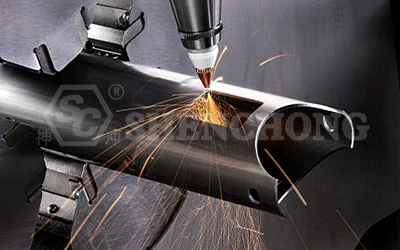
Laser tube cutting machine essentially utilizes a high-energy-density laser beam to locally melt/vaporize the tube material, combined with auxiliary gas purging to achieve cutting.
- Laser power (determines cutting capability)
- Focus position (determines cut quality)
- Auxiliary gas (affects oxidation/bright cutting)
- Motion control (determines precision and consistency)
The tube laser cutting is not simply "cutting the tube," but a precision machining process simultaneously influenced by material properties, tube structure, clamping method, geometric characteristics of round/square/irregular tubes, heat-affected zones, gas purging, and path planning.
- Accurate Cutting: Consistent dimensions, accurate hole positions, perpendicular end faces, or beveled cuts as required.
- Stable Cutting: Continuous processing without deviation, vibration, or collision.
- Clean Cutting: Minimal burrs, minimal slag, minimal oxidation, and minimal thermal deformation.
- Fast Cutting: Maximizing cycle time while maintaining quality standards.
Therefore, the key to laser metal tube cutting is not a single point, but the control of the entire processing chain.
Different pipe materials and thicknesses correspond to different focus strategies:
Thin-walled pipes (≤2mm)
Focus: Close to the material surface or slightly positive focus
Characteristics: Fine cut, small burrs
Medium-thick pipes (3–6mm)
Focus: Middle of the material
Improves penetration ability
Thick-walled pipes (>6mm)
Focus: Slightly negative focus
Improves melting depth and stability
Establish a "focus parameter database"
Calibrate separately for different materials (stainless steel vs. carbon steel have significant differences)
Higher power ≠ faster, but requires matching
Too high power → slag, edge collapse
Too low power → incomplete cut, slag buildup
Too fast speed → broken cut
Too slow speed → burnt edges, deformation
- Use the "power-speed window method" for adjustment
- Establish the optimal range for each thickness
Materials | Recommend gases | Features |
Carbon steel | Oxygen | Increases cutting speed (due to oxidation reaction) |
Stainless steel | Nitrogen | No oxidation, resulting in a bright cut |
Aluminum | Nitrogen/Air | Anti-reflective, reduces oxidation |
- Insufficient gas pressure → Slag buildup
- Excessive gas pressure → Rough cut
- Low gas purity → Surface blackening
- Stainless steel: ≥99.99% nitrogen
- Configure an automatic gas pressure regulation system
- Burst Drilling (Fast, but prone to splattering)
- Progressive Drilling (Stable but slow)
- Pulse Drilling (Recommended)
- Prioritize "Segmented Drilling" for thick pipes
- Avoid direct drilling at corners (prone to edge breakage)
- Place drilling points in scrap areas whenever possible
- Prioritize shortest paths
- Reduce idle movement
- Avoid repeated acceleration and deceleration
- Prioritize continuous cutting
- Common edge cutting (saves time)
- Automatic layout (improves material utilization)
- Avoid "heat accumulation paths" (prevents deformation)
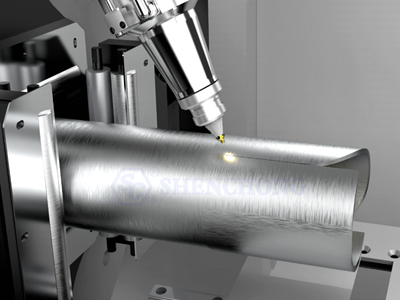
High precision required for rotation synchronization. Pay attention to "cutting closure error".
Tip:
- Use a high-precision chuck.
- Calibrate the rotation axis.
Corners are prone to burning out.
Tip:
- Decelerate at corners.
- Use a "rounded corner transition" path.
Complex programming. Prone to interference.
Tip:
- Use 3D pipe cutting software.
- Simulate interference in advance.
Causes:
- Insufficient air pressure
- Incorrect focus
- Slow cutting speed
Solutions:
- Increase air pressure
- Adjust focus
- Increase cutting speed
Causes:
- Insufficient power
- Focus misalignment
- Uneven pipe wall thickness
Solutions:
- Increase power
- Use negative focus
- Reduce cutting speed
Causes:
- Low nitrogen purity
- Oxygen contamination
Solutions:
- Increase gas purity
- Check gas line seals
Causes:
- Excessive heat input
- Inappropriate cutting path
Solutions:
- Segmented cutting
- Optimize cutting path
Causes:
- Chuck runout
- Pipe bending
- Insufficient equipment rigidity
Solutions:
- Correct pipe
- Improve clamping accuracy
- Regular equipment calibration
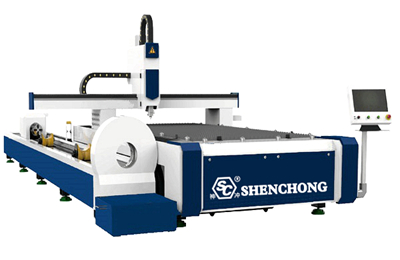
Regularly clean and protect lenses. Prevent dust contamination. Replace damaged lenses immediately.
Regularly lubricate. Check clamping force. Prevent slippage.
Maintain lubrication. Prevent backlash. Perform regular accuracy calibration.
Maintain stable water temperature (20–25℃). Prevent laser overheating.
The essence of metal tube laser cutting is not "cutting," but "control." Controlling the focus, controlling the energy, controlling the gas, and controlling the path.
Achieving these three points will create a significant difference:
- Standardized process parameters (database)
- Stable equipment precision (chuck + optics)
- Intelligent programming (path optimization)
The real "skill" of laser metal tube cutting can be summarized in one sentence:
It's not about increasing power or speed, but about finding a stable balance between the focus, gas, path, clamping, support, and material.
And the most important point to note can also be summarized in one sentence:
Tube cutting quality problems are often not the result of a single parameter error, but rather the cumulative deviation of multiple factors.