+86-158-9507-5134
info@shenchong.com
 EN
EN

In today's manufacturing industry moving towards intelligentization, traditional bending is facing multiple challenges related to efficiency, cost, and stability. Automated bending units deeply integrate robotics, CNC bending systems, and intelligent software to achieve full-process automation from material loading to finished product.
Bending is no longer a single process, but a core node connecting the entire manufacturing process. The future of automated bending cell is not "faster machines," but "thinking manufacturing units."
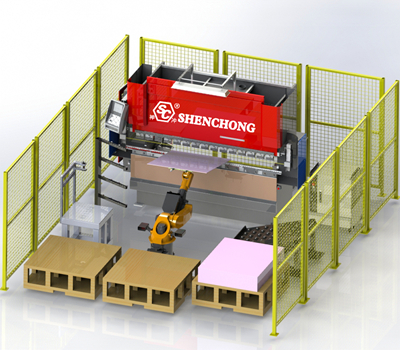
The global automated bending equipment market is projected to reach approximately $2.66 billion in 2026, continuing its growth. The electric bending machine market's CAGR is approximately 5.8%.
- Rising labor costs
- Explosive growth in small-batch, multi-variety orders
- Continuously increasing demands for manufacturing precision.
- Deep integration of robots and CNC bending machines
- Rapid growth of flexible bending centers (CAGR approximately 5.7%)
Automated bending units have moved from "equipment upgrades" to a "manufacturing model restructuring phase."
- Past Model: Bending machine + manual labor or simple robot assistance
- Current Model (Mainstream): Bending machine + robot + tooling + software = standard unit
- Future Model: Bending unit becomes a production line node
- With: Laser cutting Automated warehousing AGV logistics Deep integration
- Essential Change: Equipment competition → Unit competition → Production line system competition
- Industry Change: Traditional high-volume production → Small-volume, multi-variety production
- Upgraded Bending Unit Capabilities: Automatic mold changing / moldless bending Automatic switching between multiple workpieces Multi-sided bending with single clamping
- Key Technologies: Visual recognition Adaptive fixtures Automatic process generation
The core of the future is not "speed," but "the ability to adapt to change."
- CAD → Automatic generation of bending paths
- Reducing reliance on manual experience
- Automatic calculation
- Springback compensation
- Bending sequence
- Interference avoidance
- Continuous optimization of processes based on historical data
- Real-time simulation of bending process
- Online error prediction
- Dynamic parameter adjustment
- Digital twins can achieve real-time control and adaptive manufacturing
- Bending from "experience-based process" → "data-based process"
- 24-hour unmanned operation
- Automatic production at night
- Minimal human intervention
- Automatic loading and unloading
- Automatic flipping
- Automatic detection
- Self-diagnosis of faults
- Some companies have already achieved continuous automatic operation
Unmanned operation is not a trend, but a reality that is happening
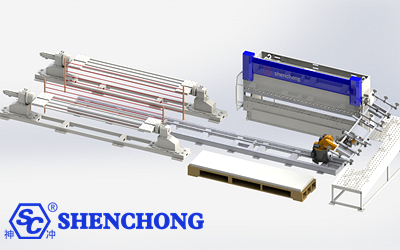
- Advantages of Electric Bending Machines: Higher precision, faster response, lower energy consumption, less maintenance.
- Industry Trends: Rapidly increasing electrification penetration rate.
- Future Landscape: Electric: Mainstream for small and medium tonnage machines.
- Hydraulic: Supplementary for heavy-duty machines.
- Essence: Upgraded drive technology = Double improvement in precision and energy saving.
- Product Changes: Standard bending unit (replicable); Modular combination.
- Customer Value: Rapid deployment; Reduced integration difficulty; Shortened return on investment cycle.
The future market will sell "replicable production capacity."
- System Structure: Equipment → Data Acquisition → Analysis → Optimization → Feedback
- System Integration: MES; ERP; Process Database.
- Results: Visualized production; Traceable quality; Predictable maintenance.
- Essence: Bending unit becomes a "data node."
- High-end Route: Fully Automated Unmanned Bending Unit
- Popularization Route: Collaborative Robots + Semi-automation
- SMEs
- Varied Orders
Automation will exhibit "tiered popularization".
-New Trend: Predicting bendability in the design phase
Technological Directions:
- AI-based manufacturability identification
- Automatic assessment of process difficulty
- Latest research shows: AI can now systematically assess bend manufacturability.
- Essence: Moving manufacturing capabilities forward to the design phase.
Over the next 5-10 years, automated bending cells will exhibit:
"3 Main Themes + 6 Directions + 2 End-Stage Forms"
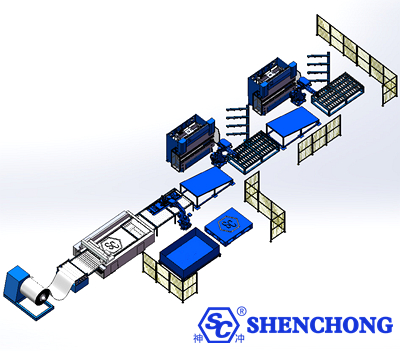
Main Themes:
- Intelligentization (AI + Data-Driven)
- Flexibility (Small Batch, Multiple Varieties)
- Unmanned Operation (Lights-Out Factory)
End-Stage Forms:
- Fully Automated Bending Island (Unmanned Production Unit)
- Digital Twin-Driven Self-Optimizing Process System
Key Change: From "Program Control" to "Autonomous Decision-Making"
AI Participation: Automatic generation of bending processes Automatic path planning Automatic compensation for angle errors
Industry Trends Are Clear: AI control systems, predictive maintenance, and real-time monitoring are becoming core capabilities
Future Capabilities: Automatic drawing recognition → Automatic program generation First Bend OK
Essential Upgrade: "Equipment Execution" → "System Thinking"
Current: Robots = Loading/Unloading + Flipping
Future: Robots = Leading Processing Units
Manifestations: Multi-robot collaborative bending Mobile Bending Cell Adaptive gripping (no manual fixture switching required)
Result: Humans from Operators → Administrator
Background: Explosive growth in customized demand (new energy, sheet metal casings, etc.)
Technological Evolution: Automated Mold Changer (ATC) Adaptive Fixtures Offline Programming
Clear Trend: Flexible production systems are becoming a key development direction
Future State: 1 unit = Simultaneously handling dozens of parts Changeover time < 1 minute
Current: Bending unit = isolated
Future: Seamless integration of the entire process: Laser cutting Automated material storage Bending Sorting
Emergence: "Unmanned Sheet Metal Production Line"
Key Technologies: AGV/AMR logistics MES system scheduling Process linkage
Core Changes: Every product has a "data mirror"
Typical Capabilities:
- Virtual simulation bending
- Pre-process verification
- Real-time parameter optimization
Academic and Industrial Trends: Digital twins are already used for real-time control and predictive optimization
- Business Value:
- Reduced trial and error
- Lower scrap rate
- Increased first-piece yield
Trend: Rapid growth of pure electric servo bending machines
Market Data: The electric bending machine market continues to grow, with expanding demand
Advantages:
- 30-70% energy saving
- Oil-free
- Higher precision
Single Machine → Unitized
Single Robot → Multi-Robot Collaboration
The key to future competition lies not in machinery, but in software:
- Integrated CAD/CAM
- Automatic Programming System
- Cloud Data Platform
Typical Directions:
- "Useable even without programming skills"
- "Robot operation by novices"
(Existing systems can automatically generate programs)
From: Human control of equipment
To: System control of production
- Shortage of skilled bending workers (a global issue)
- Continuously rising labor costs directly drive the widespread adoption of automation.
- New energy / automotive / precision manufacturing
- Extremely high requirements for repeatability precision; automation is far superior to manual labor.
The robotic bending market is growing at nearly 12%.
Note: Companies are investing heavily.
- Multiple varieties and short lead times are becoming mainstream; traditional manual labor cannot meet these needs.
Features:
- No human intervention
- 24-hour operation
- Automatic scheduling + automated execution
Components:
- Automated material storage
- Laser cutting
- Automatic bending unit
- Automated logistics
Capabilities:
- Automatically optimizes bending sequence
- Automatically corrects angle errors
- Automatically selects molds
Essence:
- Equipment possesses "experience accumulation capability"