+86-158-9507-5134
info@shenchong.com
 EN
EN

A hydraulic plate bending roll machine is a device that uses upper and lower rollers and side rollers to gradually bend metal sheets into cylindrical, conical, or arc-shaped work pieces. It is widely used in pressure vessels, wind turbine towers, pipelines, ventilation, shipbuilding, chemical, and steel structure industries.
To ensure stable operation, accurate rolling, and a long service life, the key is not just "knowing how to start the machine," but also mastering the process, operation, maintenance, and safety.
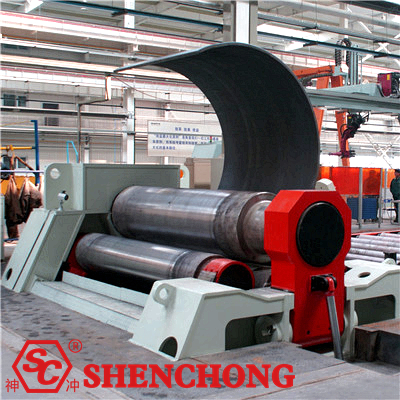
A hydraulic plate rolling machine uses a hydraulic system to drive the working rollers, achieving pre-bending, rolling, and rounding of sheet metal.
- Pressure vessels
- Wind turbine towers
- Steel structure cylinders
- Storage tanks, pipelines
- Mechanical System (Upper Roller, Lower Roller, Side Rollers)
- Hydraulic System (Pump Station, Cylinders, Valve Groups)
- Electrical Control System (PLC/CNC System)
While the structure varies slightly between different models, it typically includes the following:
- Frame and Base: Supports the rigidity of the entire machine and is fundamental to accuracy and stability.
- Main Drive Roller: Usually an upper or lower roller drives the plate material, relying on friction to complete the bending.
- Side Roller/Lower Roller Lifting Mechanism: Adjusts the bending radius of the plate material via a hydraulic cylinder, crucial for controlling forming accuracy.
- Hydraulic System: Includes an oil pump, oil tank, valve group, hydraulic cylinder, oil pipes, filter element, etc., responsible for providing stable pressure and motion control.
- Electrical Control System: Includes a push-button station, PLC, CNC system, encoder, emergency stop, limit devices, etc.
- Transmission System: Motor, reducer, gears, couplings, chains, or hydraulic drive components.
- Auxiliary Devices: Front and rear support frames, side guides, centering devices, tipping devices, ejection devices, etc.
Before formal operation, it is recommended to understand the following key points:
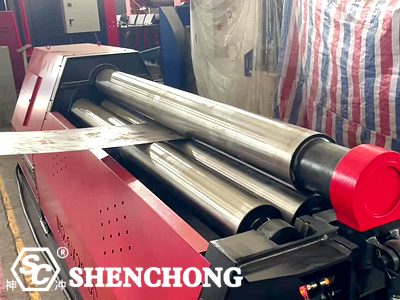
Different materials have different yield strengths, resulting in varying rolling difficulties.
- Ordinary carbon steel: Relatively easy
- Stainless steel: Greater springback, more difficult to form
- Aluminum plate: Softer, but easily scratched and deformed
- High-strength steel: Requires greater pressure and stricter processes
The sheet width cannot exceed the effective working length of the equipment, and end allowances must be considered.
Not all sheets can be rolled directly to a very small radius.
Thick plates, hard materials, and sheets with high surface finish requirements often require a larger transition radius or step-by-step forming.
Plate rolling machines often require pre-bending the ends of the sheet; otherwise, the finished product will have excessively long straight edges and poor roundness.
Metal will spring back partially after being subjected to force and unloaded. Therefore, during actual rolling, a slight "bend" is necessary to achieve the final dimensions.
This is a crucial step to avoid 80% of failures.
- Oil Level: ≥ 2/3 of the gauge
- Oil Temperature: 15℃–55℃
- Check for leaks (oil pipes, joints, valve blocks)
- Check if the pressure gauge is functioning correctly.
- Roller surface clean (no welding slag/hard objects allowed)
- Check if lubrication points are adequately lubricated
- Check for abnormal noises from bearings.
- Control panel functioning correctly
- Test the emergency stop button for effectiveness
- Check if the limit switches are functioning correctly.
- Sheet thickness ≤ Equipment rated capacity
- Sheet surface free of hard impurities
- Sheet width ≤ Effective working width
- Turn on the main power supply
- Start the hydraulic system (run unloaded for 3-5 minutes)
- Check pressure stability
Align the center of the sheet metal with the center of the rollers
- Four-roll bending: Clamp using side rollers
- Three-roll bending: Manual assisted positioning
Purpose: Reduce straight edges
Operation:
- Adjust the position of the side rollers/lower rollers
- Gradually increase pressure (avoid one-time application)
- Control the pre-bending radius
Key Points:
Pre-bending length ≥ 10 times the sheet thickness yields better results
Prevent sheet slippage
- The main roller rotates, driving the sheet metal
- Gradually press down to form an arc
- Multiple reciprocating rolls (improving roundness)
Tips:
- Thick plates → Multiple passes
- Thin plates → Small feed
- Adjust the side rollers for local correction
- Eliminate ovality
- Ensure roundness error ≤ requirements
- Reduce pressure
- Open the tilting device (tilt the upper roller)
- Lift and remove the workpiece
Do not exceed rated pressure. Thick plates require staged loading.
Initial slow speed; medium speed during forming; low speed during fine-tuning.
Symmetrical adjustment; avoid unilateral stress.
High-strength steel requires increased reduction. Empirical value: increase by 5%–15%.
The biggest problem with hydraulic plate bending roll machines isn't just "use," but "use without maintenance." It's recommended to perform daily, weekly, monthly, and yearly maintenance.
- Check oil level
- Check for oil leaks
- Check roller surface cleanliness
- Check buttons, emergency stop, and limit switches
- Check cables, connectors, and foot switch
- Wipe roller surface, guide rails, and worktable
- Clean away iron filings, scale, and welding slag
- Turn off power
- Record any abnormalities
- Check all bolts for looseness
- Check hydraulic line connectors
- Check chain, gear, and coupling condition
- Check lubrication points for insufficient oil
- Check for abnormal noises during equipment operation
- Observe motor and oil pump temperature rise
- Clean or inspect hydraulic filter
- Check hydraulic oil color and contamination level
- Check roller coaxiality and wear condition
- Verify limit switches, encoders, and sensors
- Check electrical cabinet fan, radiator, and terminals
- Check the effectiveness of safety protection devices
- Replace or clean filter element
- Sample and check hydraulic oil condition
- Check spindle bearing lubrication and clearance
- Check hydraulic cylinder seals for leaks
- Check motor insulation and grounding
- Check reducer oil level and quality
- Replace hydraulic oil (depending on operating conditions)
- Replace filter elements, seals, and wear parts
- Complete inspection of electrical components
- Check for subsidence or loosening of the machine frame foundation
- Calibrate equipment precision
- Perform thorough lubrication and cleaning of critical parts
The core of a hydraulic plate bending roll machine is its hydraulic system. If the hydraulic system malfunctions, the equipment will either operate slowly, vibrate, leak oil, or lose pressure.
Hydraulic oil is the "blood" of the system.
- Use the manufacturer's recommended model.
- Do not mix different brands.
- Keep the oil clean.
- Prevent moisture and dust from entering.
- Regularly check oil temperature and quality.
- Whitening: May indicate emulsification or water ingress.
- Blackening: High-temperature oxidation or severe contamination.
- Foaming: Indications of air suction, poor oil return, or insufficient fluid level.
- A burnt smell: Overheating or prolonged overload.
- Avoid prolonged idling during startup.
- Check for air leaks in the suction pipe.
- Pay attention to pump noise.
- Stop and inspect immediately if abnormal vibration is detected.
- Keep valve blocks clean.
- Prevent oil circuit blockage.
- Address any abnormal solenoid valve operation promptly.
- Do not arbitrarily adjust the pressure regulating valve.
- Check for scratches and rust on the piston rod surface.
- Check for aging of the seals.
- Check for oil leaks in the cylinder body.
- Check for smooth operation and any creeping.
- Regularly check for aging, bulging, and cracks.
- Replace high-pressure hoses that have exceeded their lifespan.
- Do not delay addressing joint leaks.
- Avoid pulling and friction when arranging oil pipes.
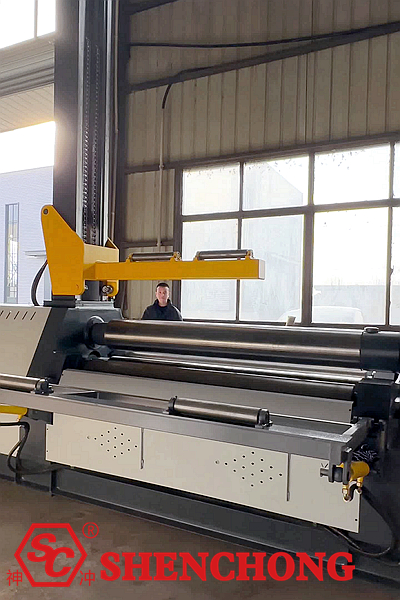
The roller surface is the part that directly contacts the workpiece and must be kept:
- Clean
- Free of welding slag
- Free of hard scratches
- Free of obvious uneven wear
Damage to the roller surface will directly cause scratches, indentations, and forming errors on the sheet metal.
- Add grease as required
- Check temperature rise
- Check for abnormal noise
- Check for gaps and looseness
- Prolonged overloading will cause frame fatigue
- Loose anchor bolts will affect accuracy
- Instable foundation will cause deviation and vibration
- Maintain lubrication
- Prevent dust from entering
- Troubleshooting should be addressed promptly
- Do not operate with defects
- Regularly dust and keep dry.
- Inspect fans and radiators.
- Prevent loose wiring terminals from overheating.
- Do not arbitrarily change parameters.
- Back up important parameters.
- In case of a fault, check the alarm code first.
- Maintain system software and hardware stability.
- Keep clean.
- Check installation location.
- Check sensitivity. Avoid collision damage.
- Monitor operating current.
- Monitor temperature rise and vibration.
- Check bearing condition.
- Protect from moisture when not in use for extended periods.
Possible Causes:
- Insufficient pre-bending
- Improper roller position setting
- Uneven left-right force
- Excessive sheet springback
- Roller wear or precision deviation
Solutions:
- Readjust process parameters
- Strengthen pre-bending
- Check alignment
- Verify equipment accuracy
Possible Causes:
- Misaligned feeding
- Inconsistent left-right pressure
- Uneven roller surface friction
- Bending or uneven stress in the sheet itself
Solutions:
- Realign
- Adjust left and right roller positions
- Check sheet flatness
Possible Causes:
- High oil temperature
- Pump overload
- Valve assembly jamming
- Poor oil tank heat dissipation
- Hydraulic oil contamination
Solutions:
- Check oil level
- Reduce overload operation
- Clean filter
- Improve heat dissipation
Possible causes:
- Insufficient oil level
- Pump wear
- Clogged filter
- System leakage
- Pressure setting too low
Solutions:
- Add oil
- Replace filter
- Check for leaks
- Test system pressure
Possible causes:
- Air suction
- Bearing damage
- Loose coupling
- Pump wear
- Excessive impact on plates
Solutions:
- Stop the hydraulic plate bending roll machine and check
- Purge air
- Tighten connections
- Replace damaged parts
Possible causes:
- Aging seals
- Loose joints
- Broken oil pipe
- Excessive pressure
Solutions:
- Tighten connections
- Replace seals
- Replace oil pipes
- Check system pressure
- Most common
- Easy to control
- Focus on pre-bending and roundness correction
- High springback
- Easily scratched
- Requires more meticulous processing and higher surface protection standards
- Soft, easily scratched
- Prevent roller surface contamination
- Excessive pressure can leave marks
- Requires larger tonnage equipment or stronger roller system
- Significant springback
- Should be formed in stages, avoid hard pressing
1) Conduct a Trial Roll First
Before mass production, roll a sample sheet first to confirm parameters before formal processing.
2) Record Process Parameters
Save successful parameters, including:
Sheet Thickness, Material, Rolling Diameter, Roller Position, Pressure, Number of Feeds.
This allows for direct recall next time.
3) Maintain Material Consistency
Use the same supplier for the same batch of sheets to avoid fluctuations in hardness and thickness.
4) Control the Environment and Cleanliness
If hard particles get trapped between the roller surface and the sheet surface, indentations are easily created.
5) Ensure Good Personnel Coordination
Clearly divide tasks for rolling, hoisting, material handling, and measurement to reduce errors.
Hydraulic plate rolling machines are heavy equipment and safety regulations must be strictly followed.
1) Standing in the danger zone is strictly prohibited
- Do not put your hands into the gap between the rollers.
- Do not approach the clamping points.
- Do not stand in the side danger zone when the work piece is being turned.
2) Appropriate lifting tools must be used
- Large plates are heavy and have sharp edges.
- They cannot be forcibly moved manually.
3) Emergency stop functionality must be confirmed
Test the emergency stop and limit switch functions before starting the machine.
4) Overloading is prohibited
Rolling beyond specifications will damage the equipment and easily cause injuries.
5) Wear protective equipment
- Non-slip gloves
- Safety shoes
- Eye protection
- Wear earplugs if necessary
6) Power must be disconnected and pressure released before maintenance
When overhauling the hydraulic system, the power supply must be disconnected and residual pressure released first.
The core principles for extending equipment life are:
Light load trial run, stable feeding, gradual pressurization, regular lubrication, maintaining cleanliness, timely troubleshooting, and strictly prohibiting overloading.
By following these points, hydraulic plate bending roll machines can generally maintain excellent precision, stability, and service life.