+86-158-9507-5134
info@shenchong.com
 EN
EN

In the processing of metal sheets, various laser cutting defects frequently occur due to factors such as material properties, equipment status, process parameters, auxiliary gas, environmental conditions, and operating methods. These laser cutting defects not only affect the product's appearance quality but also reduce dimensional accuracy, impact welding and assembly, increase rework rates, and directly affect the company's production efficiency and costs.
Therefore, establishing a systematic defect analysis and resolution system is one of the most crucial capabilities for laser cutting process engineers.
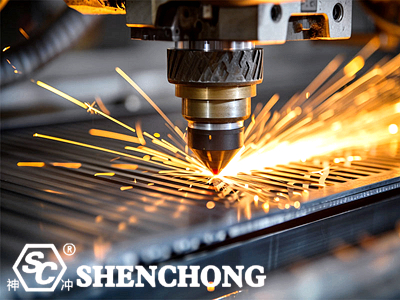
Common Laser cutting defects mainly include:
Defect Types | Typical symptoms |
Burrs | Metal residue on the lower edge |
Slag residue | Molten slag adheres to the bottom |
Burning edge | Overheated and blackened edges |
Exploding hole | Explosion point during perforation |
Incomplete cut | Incomplete cut in some areas |
Excessively wide kerf | Decreased precision |
Slanted cut | Poor perpendicularity |
Surface ripples | Uneven cut surface |
Heat deformation | Sheet warping |
Abnormal light spot | Unstable cutting |
Discontinuous cutting | Discontinuous cuts |
Lens contamination | Power attenuation |
Reflective light damage | Laser reflection damage |
Abnormal airflow | Blackened cuts |
Perforation failure | Inability to initiate cutting normally |
Burrs are one of the most common problems in laser cutting machine.
- Metal adhesion at the bottom
- Rough edges
- Grinding is required afterward
- Affects welding and assembly
Phenomenon:
- Incomplete cut
- Residual slag at the bottom
Solution:
- Increase laser power
- Reduce cutting speed
- Replace with a higher power device
Phenomenon:
- Molten metal cannot be discharged
- Stringing forms at the lower edge
Solution:
- Reduce cutting speed
- Increase auxiliary gas pressure
Phenomenon:
- Uneven cutting of upper and lower surfaces
Solution:
- Adjust focus height
- Use negative focus for thick plates
- Use zero focus or slightly positive focus for thin plates
Phenomenon:
- Slag cannot be blown out
Solution:
- Increase gas pressure
- Check for gas leaks
- Clean the gas filter
Phenomenon:
- Airflow deviation
- Unstable kerf
Solution:
- Replace the nozzle
- Correct nozzle concentricity
- Clean nozzle slag
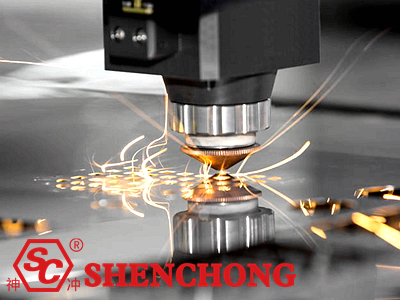
Characteristics:
- Difficult to remove
- Firmly adhered
Causes:
- Insufficient power
- Too high a focal point
- Insufficient air pressure
Characteristics:
- Easily detached
- Slightly affected
Causes:
- Unstable airflow
- Mismatched cutting speed
- Yellowing of the cut
- Blackening of the edge
- Expansion of the heat-affected zone
Solution:
- Increase the cutting speed
- Optimize the acceleration
Solution:
- Reduce the power output
- Optimize duty cycle
Solution:
- Adjust focus position
Solution:
- Use high-purity oxygen
- Check the gas supply system
Hole bursting usually occurs in:
- Thick plate perforation
- High reflective materials
- High-power equipment
Manifestations:
- Metal spatter
- Surface bursting point
- Lens contamination
Advantages:
• Reduce heat concentration
• Reduce bursting point
• Function: Reduce instantaneous energy impact
• Function: Improve perforation stability
• Function: Improve slag discharge stability
• Partial connection
• Inability to separate sheet metal
• Bottom residue
Solution:
• Increase power
• Reduce speed
Solution:
• Clean the protective lens
• Replace the focusing lens
Solution:
• Recalibrate the focus
Solution:
• Increase the auxiliary gas pressure
• Wide at the top and narrow at the bottom
• Narrow at the top Bottom width
• Inclined cut surface
Solution:
• Check laser mode
Solution:
• Calibrate focus center
Solution:
• Adjust concentricity
• Excessive heat input
• Inappropriate layout
• Dense cutting of small parts
• Segmented cutting
• Skip cutting
• Symmetrical cutting
• Increase speed
• Reduce dwell time
Function:
• Prevent parts from warping
- Power Decrease
- Unstable Cutting
- Difficulty Drilling
- Splatter from Excavated Holes
- Impure Gas
- Abnormal Cooling
- Lack of Maintenance for an Extended Period
- Regularly Replace Protective Lenses
- Use High-Purity Gas
- Check the Cooling System
- Properly Install Lenses
- Aluminum Plate
- Copper Plate
- Brass
- Damage to Laser
- Burning of Lenses
- Abnormal Optical Path
- Use Anti-High-Reflectivity Materials Laser
- Employs high-reflectivity dedicated process
- Optimizes perforation logic
- Improves sheet metal absorbance
Impact:
- Unstable cutting
- Increased burrs
Solution:
- Pressure stabilization system
- Check pipeline
Impact:
- Yellowing
- Oxidation
Solution:
- Replace with high-purity gas
- Check gas source
- Slag adhesion
- Oxidation
- Corrugation in thick plates
- Burrs
- Yellowing
- Insufficient shine
- Reflective Light
- Hole Bursting
- Rough Cut
- High Reflectivity
- Difficult Drilling
- Long Drilling Time
- Bottom Slag
- Coarse Cut Surface Stripes
- Poor Perpendicularity
- Use High-Power Equipment
- Optimize Negative Focus
- Increase Nozzle Size
- Improve Airflow Stability
- Edge Burning
- Vibration
- Small Hole Deformation
- Increase Acceleration
- Optimize Flying Cut
- Reduce Heat Accumulation
Excellent process engineers typically debug using the following logic:
- Confirm material
- Confirm thickness
- Select gas
- Set power
- Set focus
- Adjust speed
- Adjust gas pressure
- Inspect cut surface
- Fine-tune parameters
- Establish parameter database
Future laser cutting defects handling will develop towards:
- AI intelligent diagnosis
- Automatic process correction
- Online monitoring
- Intelligent visual recognition
- Automatic focusing
- Intelligent gas pressure compensation
- Digital process database
Laser cutting defects are not terrible. What is terrible is the lack of systematic analysis capabilities.
Truly excellent laser cutting technology is not just about "being able to cut," but more importantly:
- Stable cutting over long periods
- High-efficiency production
- High-quality cut surface
- Low rework rate
- Low material cost
- High level of automation
- Replicable process management
In the future, with the development of high-power lasers, intelligent process databases, and AI-powered automatic machine adjustment, laser cutting will enter a new stage of greater intelligence, standardization, and efficiency.