+86-158-9507-5134
info@shenchong.com
 EN
EN
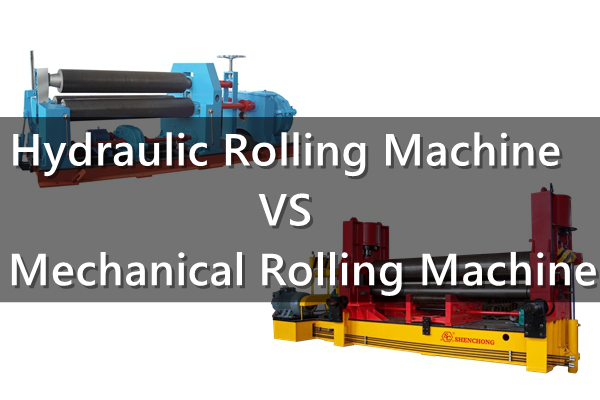
Plate rolling machines are mainly divided into hydraulic rolling machines and mechanical rolling machines based on their drive mechanism. The two differ significantly in structural principles, power transmission methods, performance characteristics, and applicable ranges. Below is a systematic, comprehensive, and in-depth comparative analysis.
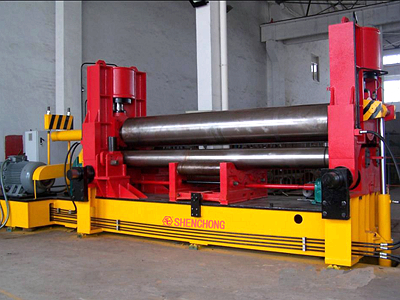
- Uses a hydraulic system (hydraulic pump + hydraulic valve + hydraulic cylinder + hydraulic motor)
- The upper or side rollers are raised and lowered by hydraulic pressure pushing the cylinder. The main drive is usually a hydraulic motor.
- Forming force is controlled by hydraulic pressure.
- Stable force output and a wide adjustable range.
- Automatic overload protection (overflow valve).
- Three-roll hydraulic plate rolling machine (e.g., W11 hydraulic three-roll plate rolling machine)
- Four-roll hydraulic plate rolling machine (e.g., W12 four-roll hydraulic plate rolling machine)
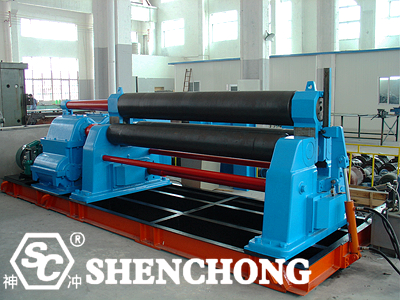
Uses a motor + reducer + gear transmission. The roller position is adjusted via a lead screw, worm gear, or eccentric mechanism.
- Good rigidity of mechanical transmission
- Relatively simple structure
- No hydraulic system
- Symmetrical three-roll mechanical plate rolling machine
- Manual upper roller pressing structure
Comparison Items | Hydraulic Type | Mechanical Type |
Power Source | Hydraulic system | Electric motor mechanical transmission |
Output Method | Hydraulic drive | Gear/screw transmission |
Power Control | Stepless adjustment | Graded or fixed |
Overload Protection | Automatic overflow protection | Mechanical limit protection |
Operating Stability | Extremely smooth operation | Mechanical impact |
Conclusion: Hydraulic control is more precise and safer.
- Hydraulic: Suitable for medium to thick plates, heavy loads, and large sizes
- Mechanical: Suitable for thin plates and small sizes
For example:
- Plates thicker than 30mm → mostly use hydraulic type
- Plates thinner than 6mm → mechanical type is sufficient
- Hydraulic (especially four-roller): Strong pre-bending capacity, short remaining straight edge
- Mechanical: Limited pre-bending capacity
- Hydraulic: Uniform pressure, more stable roundness
- Mechanical: Greaterly affected by structural rigidity
- Can be equipped with CNC system
- Can achieve automatic rolling
- Can store programs
- Can form multiple sections
- Can be linked for automatic loading and unloading
Suitable for:
- Mass production
- Smart manufacturing
- Automated production lines
- Mostly semi-automatic or manual
- Adjustment relies on human experience
- Difficult to achieve high-end CNC
Suitable for:
- Small workshops
- Simple processing
- Low-cost requirements
Item | Hydraulic rolling machine | Mechanical rolling machine |
Frame structure | Heavy-duty welded structure | Relatively Lightweight |
Bearing capacity | High | Medium |
Deformation control | Excellent | General |
Service life | Long | Medium |
- Advantages: Stable operation, low impact, long service life.
- Disadvantages: Requires maintenance of the hydraulic system, potential for oil leaks, higher cost.
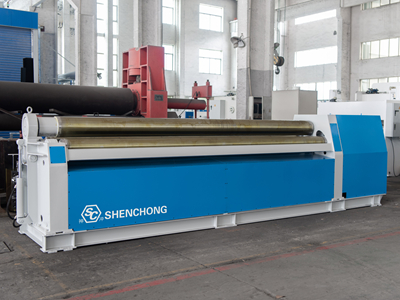
- Advantages: Simple structure, easy maintenance, low cost.
- Disadvantages: High mechanical wear, easily damaged gears and lead screws, higher noise.
Types | Price range |
Mechanical | Low |
Hydraulic | High (approximately 30%~50% higher) |
However, hydraulic systems offer better cost-effectiveness in the long run (efficiency + precision + automation).
Hydraulic rolling machine commonly used in:
- Pressure vessels
- Wind turbine towers
- Shipbuilding
- Petrochemicals
- Large steel structures
Mechanical rolling machine is commonly used in:
- Ventilation ducts
- Stainless steel decoration
- Sheet metal work
- Small hardware factories
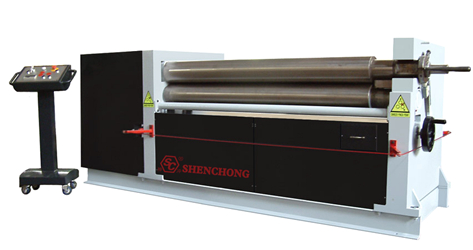
Advantages:
✔ Wide processing range
✔ High control precision
✔ Good safety
✔ High degree of automation
✔ Suitable for heavy loads
Disadvantages:
✘ High cost
✘ Complex structure
Advantages:
✔ Low price
✔ Simple maintenance
✔ Intuitive structure
Disadvantages:
✘ Limited load-bearing capacity
✘ Low degree of automation
✘ Not suitable for thick plates
Characterized by high torque, precise control, and strong automation, suitable for thick plates, large diameters, or high-precision/complex forming requirements; initial investment and maintenance requirements are higher.
Characterized by simple structure, high energy efficiency, and low operating costs, suitable for thin plates, high-volume production environments with fixed processes; precision and flexibility are lower than hydraulic.
Priority Ranking (Commonly Used):
- Sheet Thickness and Material:
Thick, high strength → Prefer hydraulic.
Thin → Mechanical is feasible and cost-effective.
- Finished Product Diameter and Shape Complexity:
Small diameter/multiple reverse rolls/complex curvatures → Hydraulic is more flexible.
- Production Requirements:
High daily output, continuous production → Mechanical or electro-hydraulic hybrid preferred.
- Precision Requirements:
High precision/repeatability → Hydraulic (servo proportional control).
- Budget:
Low budget and simple process → Mechanical.
- Maintenance Capability and Environment:
Lack of oil maintenance capability or dusty and humid operating conditions → Mechanical is more worry-free.
Working Principle
- Hydraulic: Uses hydraulic cylinders to push the upper/lower/middle rollers. Torque is generated through the hydraulic system, often driven by servo or frequency converter motors for pump station speed regulation.
- Mechanical (Gear/Worm Gear/Linkage): Drives rollers or wheels via a motor-gearbox-synchronization mechanism (chain/rack/crank), amplifying the force through mechanical transmission.
Applications
- Hydraulic: Suitable for medium to thick plates, large diameters, irregular shapes, pre-bending, and scenarios requiring high thrust and significant drop adjustment.
- Mechanical: Suitable for high-speed batch forming of thin plates, small to medium thicknesses, and production lines with high requirements for forming speed and repeatability.
Precision and Forming Quality
- Hydraulic: High adjustment precision (can achieve segmented drop, side pressure, follow-up), good winding and one-time forming effects, suitable for high-quality requirements.
- Mechanical: Good repeatability (mechanical synchronization), but less flexible than hydraulic for complex drop/local correction.
Force and Speed
- Hydraulic: High thrust but generally slower operating speed (hydraulic response and pump flow limitations).
- Mechanical: High speed and high capacity, but maximum usable force is limited by mechanical strength/transmission.
Control and Operation
- Hydraulic: Combined with PLC/servo/touchscreen, it can achieve more complex processes (follow-up, springback compensation).
- Mechanical: Simpler control, suitable for standardized, repetitive tasks.
Energy Consumption and Maintenance
- Hydraulic: Higher no-load energy consumption (pump station circulation); hydraulic oil, valves, and seals require regular maintenance.
- Mechanical: High transmission efficiency, relatively low energy consumption; bearings, gears, and synchronizing components require maintenance and lubrication.
Cost and Investment
- Hydraulic: Equipment purchase and maintenance costs are generally higher (complex hydraulic and control systems).
- Mechanical: Relatively simple structure, initial investment and maintenance costs are usually lower.
Safety
- Hydraulic: Can be equipped with multi-point safety valves and pressure monitoring, overload protection is intuitive; however, the risk of hydraulic leakage needs attention.
- Mechanical: Mechanical linkage poses a risk of pinching injury, requiring good protection and emergency stop devices.
Common Faults (Tips)
- Hydraulic: Overheating, leakage, valve block blockage, pump station malfunction.
- Mechanical: Chain/gear wear, bearing damage, transmission asynchrony.
Selection Recommendations
- For thick plates, large diameters, complex forming, and high precision, prioritize hydraulic.
- For high-speed batch production, thin plates, cost-sensitive processes, and fixed procedures, prioritize mechanical.