+86-158-9507-5134
info@shenchong.com
 EN
EN
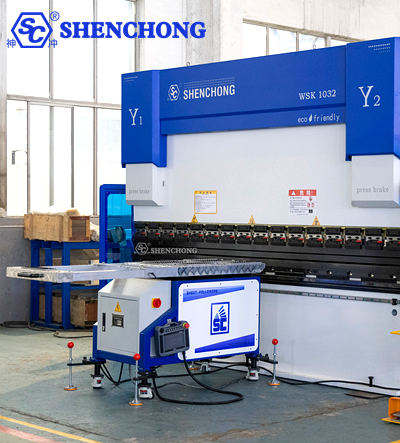
Metal sheet follow-up bending refers to a technology in which a follow-up material support device and a slider move synchronously during the bending process to provide real-time support and follow the sheet, thus maintaining a stable posture throughout the bending process.
Metal sheet follow-up bending is an important feature of modern CNC press brake bending machines to improve efficiency and quality, and is especially suitable for automated processing of large-size, thick-plate, and high-precision work pieces. The following is a systematic analysis of its structural principles, core advantages, economic value, and applicable scenarios.
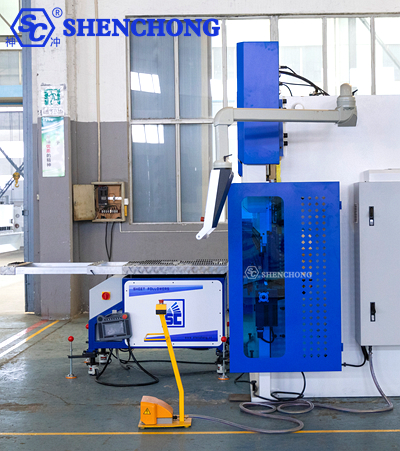
Follow-up bending refers to a bending process where the material support device (follow-up support system) automatically follows the movement of the slider, supporting the weight of the sheet metal in real time, ensuring the sheet metal maintains a stable posture throughout the bending process.
Main forms:
- Mechanical follow-up support
- Servo-electric follow-up support
- Multi-axis intelligent follow-up support
The essence of follow-up bending technology:
Improved precision, reduced manual labor, stable quality, and automation
The follow-up material support device provides dynamic support throughout the bending process, ensuring the sheet metal remains in the correct position and under stress, effectively eliminating angle errors, reverse bending, and surface scratches. It also reduces the need for manual material support, enabling single-person operation of large sheet metal bending, significantly reducing labor intensity and improving operational safety.
The automatic following and height adaptive functions further shorten preparation time and improve continuous processing efficiency, resulting in simultaneous improvements in bending quality and production efficiency.
Traditional Bending Problems:
- Sheet metal sags due to its own weight
- Instantaneous bending angle
- Difference in left and right angles of long workpieces
Follow-up System Function:
- Real-time material support eliminates sag
- Significantly improves bending angle consistency
- Significantly improves straightness of long workpieces
- Accuracy improvement can reach 30%–50%
Results:
- Reduces angle deviation and rework rate
Traditional Bending:
- Requires 2–3 people to support the material
- Manual assistance affects consistency
Follow-up Bending:
- Can be completed by a single person
- Automatic material support and synchronous movement
- Significantly reduces operational difficulty
Especially Suitable for:
- Sheets over 3 meters long
- Workpieces 4–6 meters long
Results:
- Reduces labor requirements and improves operational safety
Manual Material Support:
- Slow adjustment
- Matching errors
- Affects cycle time
Follow-up Bending:
- Automatic synchronization
- No need for repeated adjustments
- Stable cycle time
Results:
- Increased efficiency 20%~40% (Typical Applications)
Traditional Method:
- Personnel need to be close to the mold
- High risk of long plate swaying
Follow-up System:
- Operators stay away from danger zones
- Reduced risk of pinching and collision
- Particularly suitable for thick plate bending
No Support:
- Sheet dragging
- Scratches the surfac
- Affects the quality of stainless steel parts
Follow-up Support:
- Stable support
- Avoids friction and scratches
- Improves appearance quality
Result:
- More stable quality of appearance parts.
The metal sheet follow-up bending system is particularly suitable for processing high-precision, large-size workpieces such as cabinets, enclosures, door panels, stainless steel decorative parts, and large structural components. It can be integrated with robotic loading and unloading and automated bending units to build a highly efficient and flexible manufacturing production line.
By reducing labor costs, decreasing rework rates, and improving finished product consistency, this system provides a reliable guarantee for enterprises to achieve high-quality, large-scale production.
Long-term use can reduce:
- Material handling personnel
- Secondary repair costs
- Quality rework
Cost recovery is typically achieved in 1-2 years.
Can process:
- Large-sized workpieces
- Thick plates
- High-precision parts
Significantly increases equipment added value
The follow-up system is a crucial basic configuration for:
- Automatic bending unit
- Automatic bending production line
- Unmanned bending unit
Especially suitable for:
- Over 2500mm
- 3-6m plates
- ≥4mm
- Heavy work pieces
- Stainless steel
- Mirror panel
- Aluminum plate
- High stability and consistency requirements
- Automated production
Item | Manual handling | Follow-up bending |
Personnel Requirements | 2-3 people | 1 person |
Precision and Stability | Depends on human factors | High stability |
Efficiency | Moderate | High |
Safety | Medium | High |
Surface Protection | Average | Good |
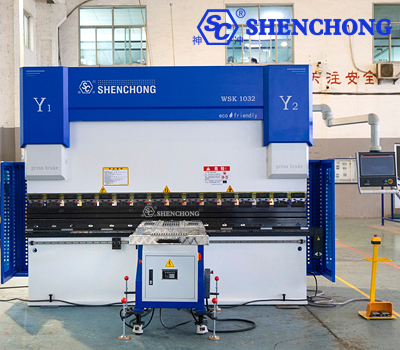
The follow-up bending system is an important auxiliary configuration for CNC press brake machines. Through CNC-controlled follow-up material support platforms, it tracks the movement of the sheet metal in real time during the bending process, automatically supporting the weight of the sheet metal and preventing sagging or displacement due to its own weight.
This system is suitable for bending long, large, and thin sheet metal parts, significantly improving bending stability and processing quality, and is a key configuration in modern high-end bending production lines.
Currently, for press brake plate bending machines over 100T and equipment over 3 meters in length, follow-up material support is becoming standard.
Reasons:
- Increasing number of large-size work pieces
- Continuously rising labor costs
- Rapidly growing demand for automated bending
- Increasing requirements for high-precision machining
The essential value of a metal sheet follow-up bending system:
Transforming large plate bending from "multi-person experience-based operation" to "single-person high-precision stable machining."
- Essential for bending large and thin plates
- Single-person completion of large bending
- Stable improvement in bending accuracy
- Automatic following reduces rework
- Basic configuration for automated bending
Metal sheet follow-up bending, through dynamic support and synchronous control, completely solves the problems of sagging, accuracy, and safety during the bending of long and heavy plates. It is a key configuration for modern CNC press brake machines and automated bending units.
Follow-up bending = Accuracy stabilizer + Manual replacement + Large plate processing capacity amplifier
Its core functions are:
- Stabilizing the plate posture
- Reducing human influence
- Extending the processing limits of bending machines
The metal sheet follow-up bending system is a crucial functional module of modern CNC bending equipment. It uses servo control to synchronize the material support device with the bending slider in real time. During bending, it continuously supports the weight of the sheet metal, effectively preventing angular errors and surface damage caused by sagging.
This system is particularly suitable for processing long, large-format, and thin sheet metal workpieces, significantly improving bending accuracy and finished product consistency. It is an essential configuration for high-end sheet metal processing companies to enhance quality.
Compared to traditional manual material support methods, the follow-up bending system significantly reduces labor intensity, enabling efficient single-person operation and minimizing safety risks associated with manual intervention. It also shortens preparation and positioning times, significantly improving batch production efficiency.
Stable material support effectively prevents sheet metal wobbling and scratches, ensuring workpiece appearance quality. It is especially suitable for producing high-quality sheet metal products such as stainless steel decorative parts, cabinet shells, and electrical enclosures.