+86-158-9507-5134
info@shenchong.com
 EN
EN
Judging the three-roll plate rolling machine quality cannot be based solely on whether it can roll plates. It requires considering its comprehensive performance across multiple dimensions, including precision, stability, rigidity, reliability, lifespan, operability, safety, and maintenance costs. While the surface structure of a three-roll plate rolling machine may seem simple, the true differences in quality often lie in the frame, rollers, transmission, hydraulics, control system, assembly precision, and long-term stability.
Three-roll plate rolling machines are among the most commonly used plate forming equipment in industries such as steel structure manufacturing, pressure vessels, wind turbine towers, shipbuilding, machining, and petrochemicals. The quality of the equipment not only affects rolling accuracy, production efficiency, and product quality but also directly impacts a company's production costs, maintenance expenses, and equipment lifespan.
Many users, when purchasing three-roll plate rolling machines, often focus only on price, brand, or tonnage parameters, neglecting crucial factors such as the machine's design, manufacturing process, core components, and control system. Therefore, to accurately judge the three-roll plate rolling machine quality, a comprehensive evaluation is needed from multiple dimensions, including mechanical structure, hydraulic system, electrical system, processing accuracy, stability, safety, and service life.
The frame is the foundation of the entire plate rolling machine.
- Adopts an integral welded frame structure
- Uses Q355B or higher high-strength steel plates
- Undergoes overall annealing treatment after welding
- Effectively eliminates welding stress
- Insufficient steel plate thickness
- Severe welding deformation
- Prone to deformation after long-term use
Observation:
- Frame steel plate thickness
- Weld quality
- Reinforcing rib layout
High-quality equipment has uniform and continuous welds:
- No slag inclusions
- No porosity
- No cracks
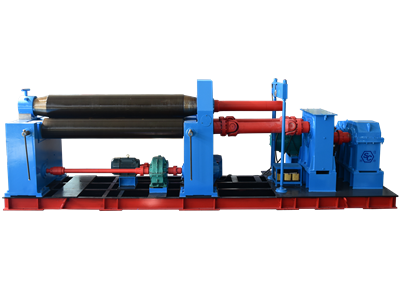
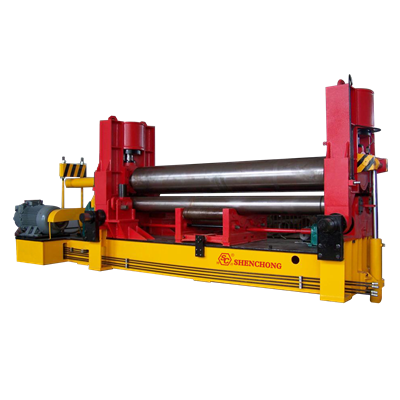
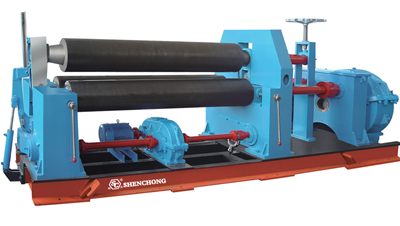
Three-roll plate bending machines are mainly divided into:
Features:
- Simple structure
- Low cost
Disadvantages:
- Limited pre-bending capacity
Suitable for:
- Ordinary rolling processing
Features:
- Upper roll is fixed
- Lower roll and side rolls move
Advantages:
- Good pre-bending effect
- Small remaining straight edge
Suitable for:
- High-precision processing
Features:
- Higher rigidity
- Higher precision
Suitable for:
- Thick plate processing
Reputable manufacturers will optimize the roller movement trajectory according to the working conditions.
The roller is the most crucial component of a plate rolling machine.
It accounts for over 40% of the equipment's performance.
High-Quality Rollers:
Used:
- 42CrMo
- 40CrNiMo
- 35CrMo
Forged:
Features:
- High strength
- Good toughness
- High wear resistance
Ordinary Equipment:
Used:
- 45# steel
Even:
- Cast steel
Prone to wear after long-term use.
High-quality: Integral free forging
Inferior: Welded and spliced
Or ordinary round steel turned
Judgment method:
- Require the manufacturer to provide:
- Material certificate
- Forging report
- Heat treatment report
High-quality rollers:
After:
- Tempering treatment
- High-frequency quenching
Hardness:
- HRC45~55
Features:
- Wear-resistant
- Compressive strength
- Non-deformable
Untreated rollers:
After several years of use:
- Surface wear
- Decreased precision
Very obvious.
The ultimate value of a plate rolling machine lies in its precision.
High-quality equipment:
Roundness error:
≤1mm
Even:
≤0.5mm
Low-end equipment:
Roundness error:
2~5mm or more
After rolling the cylinder:
High-quality equipment:
≤1.5mm
Ordinary equipment:
3~8mm
High-quality equipment:
Rolled cylinder:
- No twisting
- No eccentricity
Easy welding joints
Pre-bending capacity is a crucial indicator for evaluating the three-roll plate rolling machine quality.
When rolling sheet metal:
Straight edges will remain at both ends.
The smaller the straight edges:
Higher quality.
High-quality plate rolling machine:
Remaining straight edge:
1.5–2 times the plate thickness
For example:
10mm steel plate
Remaining straight edge:
15–20mm
Ordinary equipment:
Straight edge:
50–100mm or even more.
The hydraulic system determines the stability of the equipment.
High-Quality Configuration:
Hydraulic Valves:
- Rexroth
- Yuken
- Atos
Hydraulic Pumps:
- Bosch Rexroth
- Vickers
- Parker
Standard Configuration:
Generic Components
Prone to:
- Oil Leakage
- Overheating
- Unstable Pressure
High-Quality System:
- Simple Piping
- Low Pressure Loss
- Fast Response
Long-Term Operation:
Low Temperature Rise
Poor Equipment:
After 2 Hours of Operation:
Oil Temperature Increases Significantly
Affecting Lifespan
Large Plate Rolling Machines Must Have:
- Electronic Synchronization
- Hydraulic Synchronization
Otherwise:
- Left-Right Imbalance
- Causing Rolling Errors.
High-Quality Brands:
- SEW
- FLENDER
- Bonfiglioli
Features:
- High torque
- Low noise
Inferior Gear Reducers:
Prone to:
- Overheating
- Oil leakage
- Gear damage
High-Quality:
- 20CrMnTi
- Carburizing and quenching
- Gear grinding process
Common:
- 45# steel
- Direct machining
- Shorter lifespan
Modern plate rolling machines increasingly rely on automation.
High-Quality Brands:
- Siemens
- Schneider
- Mitsubishi
Features:
- Stable
- Anti-interference
- Low failure rate
High-Quality Equipment:
Supports:
- Parameter storage
- Automatic rolling
- Fault alarm
High-End Equipment Supports:
- Automatic compensation
- Automatic calculation of unfolded length
- Automatic generation of rolling program
Even the best design is useless if the machining is poor.
High-Quality Manufacturers:
Gantry Machining Center - One-time Machining
Guarantees:
- Parallelism
- Perpendicularity
Inspection Items:
- Cylindricity
- Runout
- Concentricity
High-Quality Equipment:
Roller Runout: ≤0.05mm
Inspections:
- Roller Parallelism
- Bearing Clearance
- Gear Meshing
Bearings determine lifespan.
High-Quality Configuration:
- SKF
- FAG
- NSK
- TIMKEN
Standard Configuration:
Domestic Ordinary Bearings
Lifespan Difference:
3~5 times or more.
High-quality equipment should have:
- Protective cover
- Anti-pinch device
- Limit protection
- Emergency stop button
- Overload protection
- Leakage protection
- Safety relief valve
- Pipeline explosion-proof valve
Many manufacturers exaggerate their specifications.
For example:
Advertisement: 20mm rolling capacity
Actual: Struggles even with 16mm.
On-site testing is recommended:
For example: Nominal 20mm equipment
Directly rolls: 20mm Q235 steel plate
Observation:
- One-time forming
- Motor load
- Hydraulic pressure
- Roundness quality
Continuous production test: Running for more than 8 hours.
Observation:
- Temperature rise
- Vibration
- Noise
- Oil leakage
High-quality equipment:
Continuous operation: Stable operation for 24 hours.
High-quality manufacturers typically possess:
- Electrical Engineers
- Hydraulic Engineers
- Mechanical Engineers
Domestic:
- 24-hour response
- 48-hour on-site arrival
Including:
- Bearings
- Seals
- Electrical Modules Long-term supply.
Recommended key inspection points during procurement:
Inspection Items | Premium Standard |
Frame Material | Q355B or higher |
Roller Material | 42CrMo forgings |
Heat Treatment | Temperature + Quenching |
Roundness Error | ≤1mm |
Roller Runout | ≤0.05mm |
Hydraulic System | International or Top-Tier Brands |
PLC System | Siemens/Schneider Electric |
Bearings | SKF/FAG/NSK |
Welding Quality | Defect-Free Welds |
Oil Leakage | No Obvious Leakage |
Noise Level | Smooth Operation and Low Noise |
Safety Features | Complete and Complete |
A truly high-quality three-roll plate bending machine can be summarized as "five observations, five tests, and five verifications."
- Observe the structure
- Observe the rollers
- Observe the hydraulics
- Observe the electrical system
- Observe the assembly
- Measure roundness
- Measure straight edges
- Measure coaxiality
- Measure runout
- Measure continuous operation stability
- Verify material reports
- Verify heat treatment reports
- Verify machining accuracy reports
- Verify trial run data
- Verify customer usage cases
For heavy-duty industries such as steel structures, wind turbine towers, and pressure vessels, it is recommended to prioritize three-roll plate bending machines that use 42CrMo integral forged rollers, hydraulic synchronous control, CNC system control, high-precision pre-bending function, and internationally branded hydraulic and electrical components. Although the initial investment is higher, the equipment lifespan can typically reach 15-20 years or more, and the overall operating cost is far lower than that of low-priced equipment.