+86-158-9507-5134
info@shenchong.com
 EN
EN
When selecting steel laser cutting machine, don't just look at "wattage" or "cutting thickness." First, clearly state your workpiece requirements, output, precision, plate thickness, plate width, and automation level. The most crucial factor in machine selection is the application scenario, not just cutting time. It also emphasizes considering the integration of upstream and downstream processes.
With the rapid development of industries such as sheet metal processing, steel structure manufacturing, construction machinery, power equipment, automotive parts, and home appliance manufacturing, fiber laser cutting machines have become essential equipment in the metal processing field. However, the market offers numerous laser cutting machine brands with vastly different configurations and prices ranging from tens of thousands to millions of dollars. Many companies easily fall into the misconception that "higher power is better" or "cheaper price is better" when purchasing.
In reality, selecting a steel plate laser cutting machine suitable for your production needs requires a comprehensive evaluation of multiple aspects, including the processed materials, plate thickness range, production scale, equipment configuration, core components, automation level, and after-sales service.
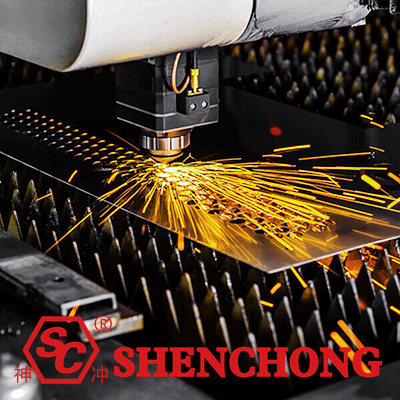
Before purchasing a steel laser cutting machine, you must first define your production needs.
Common cutting materials:
- Carbon steel
- Stainless steel
- Galvanized sheet
- Aluminum sheet
- Copper sheet
- Brass
- High-strength steel sheet
- Silicon steel sheet
Different materials have different laser power requirements.
For example:
Materials | Cutting Difficulty |
Carbon steel | ★★ |
Stainless steel | ★★★ |
Aluminum plate | ★★★★ |
Copper plate | ★★★★★ |
Highly reflective materials (aluminum, copper) require higher power and better laser source protection systems.
Thickness determines equipment power.
Applicable Industries: Electrical Cabinets, Kitchenware, Home Appliances, Billboards
Recommended Power: 1500W, 2000W, 3000W
Applicable Industries: Sheet Metal Processing, Construction Machinery, Elevator Manufacturing
Recommended Power: 6000W, 12000W
Applicable Industries: Steel Structures, Shipbuilding, Heavy Machinery
Recommended Power: 20000W, 30000W, 40000W
Recommended: Single Workbench Equipment
Recommended: Exchange Platform Steel Laser Cutting Machine
Recommended: Automated Loading and Unloading Production Line, Intelligent Warehousing System
Many users' most pressing question: Is higher power always better?
Answer: No.
Higher power results in:
- Higher purchase costs
- Increased power consumption
- Higher maintenance costs
The choice should be based on actual processing needs.
Power | Carbon steel | Stainless steel |
1500W | 8mm | 4mm |
3000W | 16mm | 8mm |
6000W | 25mm | 16mm |
12000W | 40mm | 30mm |
20000W | 60mm | 50mm |
30000W | 80mm | 60mm |
Many companies only focus on the laser, neglecting the machine tool body.
In reality: The machine tool bed determines the equipment's lifespan and precision.
Usage: Thick steel plate welding
Advantages:
High rigidity
Strong resistance to deformation
Annealing Function:
Eliminates welding stress
Prevents long-term deformation
High-quality manufacturers typically use:
Heat treatment above 600℃
Further releases residual stress.
Guarantee:
Long-term stable precision
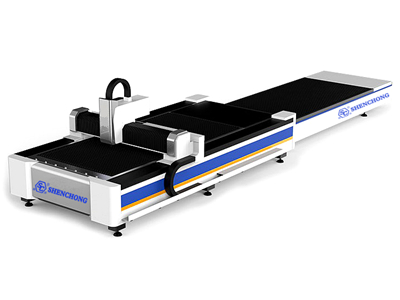
The laser is the "heart" of the equipment.
Mainstream Brands:
Features: High stability, excellent beam quality
Features: High cost-performance ratio, high market share in China
Features: Mature and reliable, low maintenance cost
Priority: Brands with large market share and comprehensive after-sales service systems.
The cutting head determines:
Precision, cut quality, piercing efficiency
Mainstream Brands:
Precitec, Raytools, WSX
Key Considerations:
Auto-focusing, anti-collision function, temperature monitoring function
Determines:
Operating speed, positioning accuracy
Preferred Brands:
Yaskawa (Japan)
Panasonic (Japan)
Schneider Electric (France)
Recommended Brands:
HIWIN
PMI
YYC
LEITESEN
Requirements:
High-precision grinding, high rigidity
A test cut must be performed on-site during machine testing.
Key Observations:
High-Quality Equipment: Uniform Kerf
Cut Side: No Obvious Bevel
High-Quality Cutting Effect: Less Burrs, Easy to Clean
Inspection: Roundness, Concentricity
Especially Inspect: Small Hole Cutting Capability
Modern factories increasingly emphasize automation.
Automatic Focusing, Automatic Edge Finding, Automatic Layout
Advantages: Reduces loading and unloading time, increases efficiency by over 30%
Advantages: Reduces manual labor
Suitable for: Mass production enterprises
Enables: Automated material handling, Automated delivery, MES integration
Many companies only look at the steel laser cutting machine price.
In reality, they should calculate:
Includes:
Equipment Price Approx. 60%
Electricity Costs Approx. 10%
Includes:
Oxygen
Nitrogen
Compressed Air Approx. 15%
Approx. 10%
Approx. 5%
Even the best equipment can malfunction.
Assessment:
Service Response Time
Recommendation: Response within 24 hours
Key Points to Understand:
- Laser
- Cutting Head
- Lens
- Nozzle
Are these items kept in stock long-term?
The manufacturer should provide:
- Operation training
- Programming training
- Maintenance training
Processing Thickness: 1-10mm
Recommended: 3000W 3015 worktable
Processing Thickness: 1-20mm
Recommended: 6000W-12000W with exchange platform
Processing Thickness: 10-40mm
Recommended: 12000W-20000W large-format equipment
Processing Thickness: 20-60mm
Recommended: 20000W and above with automatic loading and unloading system
This can be summarized as "Six Things to Look For and Six Things Not to Look For":
✅ Look at processing requirements
✅ Look at machine structure
✅ Look at the brand of core components
✅ Look at the cutting sample effect
✅ Look at the level of automation
✅ Look at after-sales service capabilities
❌ Don't just look at the price
❌ Don't just look at the power
❌ Don't just look at the advertised parameters
❌ Beyond Brand Recognition
❌ Beyond Cutting Speed
❌ Don't Ignore Long-Term Operating Costs
For most sheet metal processing companies, 6000W-12000W exchange platform fiber laser cutting machines are currently the most cost-effective and widely applicable mainstream choice. However, for steel structures, construction machinery, and heavy industry sectors, ultra-high power steel laser cutting machines of 20000W and above, equipped with automated loading and unloading systems, better demonstrate production efficiency and long-term investment value.