+86-158-9507-5134
info@shenchong.com
 EN
EN
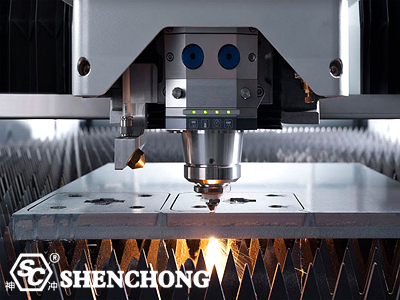
Fiber laser cutting machine for metal sheets typically refer to two-dimensional laser cutting systems used for processing flat metal materials. They utilize a fiber laser to output high-energy-density laser light, which is focused by the cutting head and applied to the surface of the sheet metal. Melting, vaporization, or oxidation reactions are completed in a very short time, and the molten metal is blown away from the kerf with the help of auxiliary gas, thus creating a high-precision cut.
For modern sheet metal, chassis and cabinet, construction machinery, automotive parts, hardware products, and steel structure industries, this type of equipment has become essential for high-efficiency, high-flexibility, and low-contact processing. The core advantages of fiber laser technology lie in its high efficiency, low energy consumption, strong integration, and the ability to achieve good speed and edge quality when cutting metal.
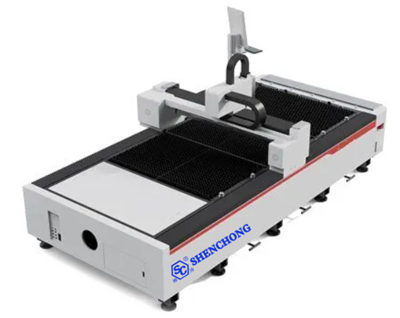
A fiber laser cutting machine for metal sheets is an advanced CNC machining equipment that uses a high-energy-density fiber laser beam to melt and vaporize metal materials, and then uses assist gas to achieve high-speed cutting.
It is widely used in:
- Sheet metal manufacturing
- Electrical cabinet industry
- Construction machinery
- Steel structures
- Kitchen equipment
- Elevator manufacturing
- Automotive parts
- Agricultural machinery
- Advertising metal lettering
- Chassis and cabinets
- New energy equipment
- Aerospace
- Precision parts processing
Compared to traditional flame cutting, plasma cutting, and mechanical shearing methods, fiber laser cutting offers:
- Higher precision
- Smaller kerf
- Higher speed
- Higher degree of automation
- Greater material adaptability
- Less post-processing
- Lower energy consumption
It has become one of the most crucial pieces of equipment in the modern metal processing industry.
The fiber laser generates a high-quality laser beam through:
- Semiconductor pump source
- Rare-earth element-doped fiber
- Resonant cavity system
This laser beam passes through:
- Fiber transmission
- Collimation
- Focusing lens group
Ultimately forming a spot of extremely high energy density.
The spot temperature can instantly reach:
- Thousands of degrees Celsius
- Even tens of thousands of degrees Celsius
This causes the metal to rapidly:
- Melt
- Vaporize
- Combust
The molten slag is then blown away by auxiliary gas, completing the cutting process.
Complete Cutting Process:
Commonly supports:
- DXF
- DWG
- AI
- PLT
- IGS
- STEP
The system automatically generates the cutting path.
Servo system drives:
- X-axis
- Y-axis
- Z-axis
Achieving high-speed positioning.
The laser is focused by the cutting head to form an extremely small spot.
Typical laser spot diameter:
- 0.08mm
- 0.1mm
- 0.15mm
Laser irradiation of the material surface:
- Rapid heating
- Melting
- Vaporization
Forming a kerf.
Commonly used gases:
- Oxygen
- Nitrogen
- Air
The molten slag is blown away from the kerf.
The equipment operates continuously according to the program, enabling the processing of complex shapes.
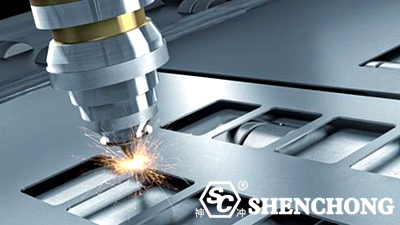
The fiber laser is the core component of a fiber laser cutting machine for metal sheets.
Common Brands:
- IPG
- MAX
- Raycus
- JPT
- nLIGHT
Function:
Provides laser energy
Power Range:
- 1kW
- 3kW
- 6kW
- 12kW
- 20kW
- 30kW+
- 60kW+
Responsibilities:
- Focusing
- Following
- Gas jetting
Common Brands:
- Raytools
- Precitec
- WSX
- BOCI
Main Functions:
- Auto-focusing
Automatically adjusts the focus position according to material thickness.
- Collision protection
Prevents collision damage.
- Capacitive following
Automatically detects the height of the sheet material.
The CNC system is the "brain" of the fiber laser cutting machine for metal sheets.
Common Systems:
- FSCUT
- CypCut
- Beckhoff
- PA
- Siemens
Main Functions:
- Graphic Import
- Layout
- Path Optimization
- Parameter Calling
- Automatic Drilling
- Automatic Obstacle Avoidance
- Flying Cutting
- Leaping Cutting
The machine bed determines the stability of the equipment.
High-end equipment uses:
- Heavy-duty welded bed
- Overall annealing treatment
- Gantry structure
Features:
- Shock resistance
- Deformation resistance
- High stability
The servo drive system controls motion precision.
Includes:
- Servo motor
- Driver
- Reducer
- Gear rack and pinion
- Guide rail
Common Brands:
- Yaskawa
- Fuji
- Panasonic
- Innovance
Used for:
- Laser cooling
- Cut head cooling
Abnormal cooling:
- Laser may be damaged
- Optical component lifespan reduced
Gases | Applications |
Oxygen | High-speed cutting of carbon steel |
Nitrogen | Oxidation-free cutting of stainless steel |
Air | Cost reduction |
Argon | Special material protection |
Compared to plasma: 2-5 times higher efficiency, especially noticeable for thin plates.
For example: 3mm stainless steel: laser speed can reach over 20m/min.
Typical Precision:
±0.03mm
±0.05mm
Suitable for:
- Precision parts
- High-end sheet metal
Features:
- Fewer burrs
- Small heat-affected zone
- Narrow kerf
- Good perpendicularity
Many work pieces:
- Can be directly welded
- No secondary processing required
Supports:
- Automatic loading and unloading
- Automatic exchange platform
- Automatic sorting
Achieves: Unmanned production
Can Cut:
- Carbon steel
- Stainless steel
- Aluminum plate
- Copper plate
- Brass
- Zipper plate
- Silicon steel sheet
- Titanium alloy
High photoelectric conversion efficiency: Over 30%
Compared to CO₂ laser:
- More energy-efficient
- Less maintenance
Suitable for:
- Thin sheet processing
- Advertising industry
- Sheet metal parts
Cutting capacity:
Materials | Thickness |
Carbon steel | Within 10mm |
Stainless steel | Within 5mm |
This is the mainstream model.
Suitable for:
- Steel structures
- Construction machinery
- Elevator industry
Cutting capacity:
Materials | Thickness |
Carbon steel | Over 25mm |
Stainless steel | About 25mm |
This type is high-end heavy industrial equipment.
Suitable for: Thick plate processing, shipbuilding, large steel structures
Features: Ultra-high speed, strong thick plate processing capability
Required Checks:
Power Supply
Confirm:
Stable voltage
Normal grounding
Check:
Gas pressure
Gas purity
Pipeline leaks
Check:
Water level
Water temperature
Water pressure
Typical Temperature:
22℃
25℃
Ensure:
Guide rail lubrication is normal
Laser protective lens
Check:
Contamination
Burden
Standard Procedure:
Turn on: Main power supply
Turn on:
Voltage regulator
Water chiller
Turn on:
Air compressor
Gas system
Start: CNC system
Start: Laser
Wait for laser self-test to complete.
Equipment returns to reference point (zero).
Common Software: CypCut, FastCAM, AutoCAD
Layout optimizes material utilization.
Tips: Common-edge cutting, Automatic nesting, Part nesting
Can save: 5%~20% of material
Including: Power, Speed, Focus, Air Pressure, Frequency
Ensure: Flat sheet material, No warping, Correct placement
Higher power: Faster cutting, Stronger ability for thick plates
However: Not always the higher the better, Requires matching the material.
Too fast: Incomplete cut
Too slow: Increased burrs, Overheating
Focus position is extremely critical.
Different materials: different focal point locations
For example:
The focal point of carbon steel is usually located below the surface of the plate.
The focal point of stainless steel is usually located near the surface of the plate.
Too low pressure: poor slag removal.
Too high pressure: coarser cut.
Commonly Used: Oxygen
Features: High speed, strong ability to cut thick plates
Caution: Prevent slag buildup
Commonly Used: High-Pressure Nitrogen
Features: White cut, no oxidation
Suitable for: High-end decorative parts
Difficulties: High reflectivity, easy to slag buildup
Suggestions: Use high power, high-gloss surface protection, dedicated parameters
Features: High reflectivity
Requires: Anti-reflective laser, stable perforation process
Features: Non-stop perforation
Advantages: Greatly improves efficiency
Suitable for: Batch processing of thin plates
Rapidly lifts and moves the cutting head.
Reduces: Idle time
Multiple parts share an edge.
Advantages: Saves materials, improves efficiency
Preserves small connection points.
Prevent: Parts from warping
Key Maintenance: Protective lens, Focusing lens
Caution: Do not touch with hands. Use a lint-free cloth.
Daily: Clean dust. Lubricate.
Otherwise: Decreased precision.
Regularly: Replace purified water. Clean the filter.
Avoid: Scale blockage.
Check: Air leaks, moisture, oil stains.
Otherwise: Decreased cutting quality.
Caution: Dustproof, moisture-proof, shockproof.
Maintain an environment that is: Constant temperature and dry.
Causes: Insufficient power, excessive speed, lens contamination
Solutions: Increase power, decrease speed, clean lens
Causes: Incorrect focus, insufficient air pressure
Solutions: Adjust focus, increase air pressure
Causes: Rust on material surface, incorrect parameters
Solutions: Clean material, adjust drilling parameters
Causes: Insufficient nitrogen purity
Solutions: Replace with high-purity nitrogen
Causes: Abnormal water temperature, abnormal optical path
Solutions: Check chiller, check laser
Laser is a high-energy, dangerous light source.
Prohibited: Direct eye contact with laser.
Must wear: Laser safety goggles.
Cut area: No flammable materials allowed.
Must have: Fire extinguisher.
Prohibited: Live repairs.
Power must be disconnected before repairs.
High-pressure gas cylinders: Securely fastened.
Avoid: Exposure to direct sunlight and impact.
Contaminated lenses will severely reduce power.
Especially nitrogen for stainless steel cutting.
Recommendation: 99.99% purity or higher.
Different materials require different parameter databases.
Establishing a company-specific process database is crucial.
Sheet warping affects the following height
leading to unstable cutting
Modern laser cutting has entered the era of intelligentization
Including:
AI parameter optimization
Automatic edge finding
Automatic layout
Automatic detection
Automatic correction
Automatic deviation correction
Automatic production lines
Connectable to:
Automatic material storage
Loading and unloading robots
Sorting systems
MES systems
Embodying:
Smart factories
Ultra-high power development
Current trends:
20kW+
30kW+
60kW+
Features:
Faster
Thicker
More stable
The sheet metal industry has the most applications.
Features: Multiple varieties, small batches, laser cutting offers significant flexibility.
Demand: Thick plates, large sizes, high-power equipment offers huge advantages.
Requirements: High precision, minimal burrs, laser cutting is ideal.
Materials: Primarily thick plates, requirements: High-stability equipment.
Don't blindly pursue high power.
Consider: Main products, material type.
A high-quality machine bed determines long-term precision.
Key components: Laser, cutting head, servo system, control system.
Laser equipment is high-tech equipment; after-sales service is extremely important.
- Higher Power
- Higher Intelligence
- Higher Automation
- More Energy Efficient
- Higher Speed
- Less Manual Reliance
- Unmanned Cutting
- Intelligent Scheduling
- Automated Logistics
- Cloud Data Management
Fiber laser cutting machine for metal sheets are advanced manufacturing equipment that combines high-energy lasers, precision motion control, and auxiliary gas processes. They are particularly suitable for the efficiency, precision, flexibility, and consistency requirements of modern sheet metal processing.
Fiber laser cutting machines for metal sheets are one of the most core and advanced processing equipment in the modern metal processing industry.
They possess significant advantages such as:
- High Efficiency
- High Precision
- High Flexibility
- High Automation
- Low Operating Costs
With the development of:
- Smart Manufacturing
- Industry 4.0
Automated Factories, fiber laser cutting machines will continue to rapidly upgrade towards:
- Ultra-High Power
- Intelligent Control
- Automated Lines
- Unmanned Production
For modern manufacturing enterprises, laser cutting equipment is no longer just a processing machine, but a crucial core piece of equipment for improving:
- Production Efficiency
- Product Quality
- Market Competitiveness
- Automation Level