+86-158-9507-5134
info@shenchong.com
 EN
EN
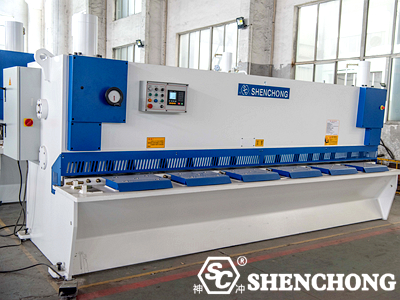
This hydraulic shear maintenance manual applies to all types of guillotine hydraulic plate shearing machine (common models such as QC11Y/QC11K). Please refer to the specific equipment manual and on-site working conditions before proceeding.
- Ensure shearing accuracy and stability.
- Extend the lifespan of the hydraulic system and mechanical structure.
- Reduce failure rate and downtime risk.
- Ensure operational safety.
- Check if the hydraulic oil level is within the indicated range.
- Observe for leaks in the oil pipes, joints, and valve blocks.
- Check if the blade fixing bolts and material clamping device are loose.
- Check if the back gauge and limit switches are sensitive.
- Pay attention to any abnormal noise or vibration during shearing.
- Observe if the pressure gauge is stable.
- Do not shear beyond specifications (thickness, material).
- Clean metal shavings from the worktable and blade edge.
- Wipe the guide rails and back gauge screw surface.
- Turn off the power and disconnect the hydraulic system.
- Check the wear of the blade edges.
- Check if the pressure cylinder returns to its normal position.
- Check the lubrication of the back gauge screw and guide rail.
- Check for loose or aged electrical wiring.
- Check the hydraulic oil temperature.
- Clean the hydraulic oil tank vent filter cap.
- Check the hydraulic oil color, for bubbles and impurities.
- Check the working status of the oil pump and relief valve.
- Verify that the blade clearance meets material requirements.
- Check the frame, slide block, and connecting rod for abnormal wear.
- Tighten critical bolts (tool holder, main cylinder seat).
- Replenish lubrication to the guide rails, lead screw, and shaft pins.
- Use the specified type of lubricating oil/grease.
- Replace or clean the hydraulic oil filter element.
- Calibrate the back gauge positioning accuracy.
- Check the limit switches and light curtains (if present).
- Check for aging of cylinder seals.
- Replace the hydraulic oil (according to the manufacturer's specified model).
- Comprehensively check the hydraulic valve assembly and pump efficiency.
- Inspect or flip the cutting tools (replace if necessary).
- Check the electrical control system and CNC system parameter backups.
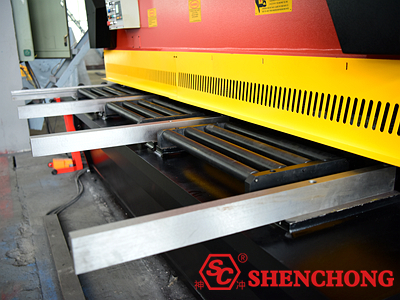
- Keep the cutting edge clean and prevent impacts.
- Regularly check the cutting tool clearance and parallelism.
- Turn or regrind the cutting tool promptly after dulling.
- Changing cutting tools must be done in pairs and symmetrically.
Fault | Cause | Quick Check | Troubleshooting |
Large shear burrs | Blade dulling; excessive/uneven clearance; high material hardness | Observe the cut; measure the gap | Adjust blade clearance; flip or re-sharpen blades; match material parameters |
Crooked shear cut | Poor parallelism of upper and lower blades; loose tool holder | Observe the shearing process without load; check the fasteners | Correct parallelism; tighten tool holder and guide components |
Insufficient material clamping | Insufficient pressure in the pressure cylinder; aging seals | Observe the material clamping action; measure the pressure | Inspect seals; adjust pressure; clean valve assembly |
Slow or no return stroke | Stuck valve core; oil contamination | Listen to the valve sound; observe the oil color | Clean valve assembly; replace filter element/hydrant |
System overheating | Poor oil quality; overflow valve constantly open; excessive load | Measure the oil temperature | Change hydraulic fluid; adjust overflow valve; avoid over-specification shearing |
High oil pump noise | Insufficient oil suction; air intake; improper oil viscosity | Check the oil level and pipelines | Add oil and vent; change to appropriate viscosity oil |
Inaccurate back gauge positioning | Wearing lead screw; encoder/switch malfunction | Perform a jog test | Lubricate or replace lead screw; calibrate/replace components |
Incomplete stroke | Limit switch misalignment; parameter drift | Check the switch position | Reposition stroke; parameter calibration |
Oil leakage | Loose connectors; aging seals | Visual inspection | Tighten joints; replace seals |
Electrical malfunction | Loose wiring; interference | Roller wire inspection | Tighten wiring; tidy grounding and wiring routing |
- Regular hydraulic shear maintenance maintains blade sharpness and proper clearance.
- Prevents large burrs and skewing caused by guide rail and blade holder wear.
- Ensuring accurate back gauge positioning and improving dimensional consistency.
Result: Stable shearing quality and significantly reduced rework rate.
- Clean hydraulic oil reduces wear on oil pumps, valve groups, and cylinders.
- Timely lubrication prevents premature damage to guide rails and pins.
- Preventative maintenance is more effective than reactive repair.
Result: Lifespan of key components extended by over 30%.
- Most failures stem from oil contamination, loose fasteners, and insufficient lubrication.
- Daily and periodic maintenance allows for early detection of potential problems.
- Avoids sudden downtime affecting production plans.
Result: More continuous production and more controllable delivery times.
- Inadequate maintenance can easily lead to material clamping failure, malfunctions, and oil leaks. - Regularly inspecting electrical and hydraulic systems reduces safety risks.
- Complies with workshop safety and shear machine management regulations.
Result: Reduced workplace injuries and equipment accidents.
Project | No maintenance | Standard maintenance |
Instrument replacement frequency | High | Low |
Hydraulic component damage | Prone to occurrence | Significantly reduced |
Downtime maintenance | Passive | Planned |
Total cost | High | Low |
Result: The average annual maintenance cost per unit of equipment decreased significantly.
Common Problems | Root Causes | Relevance | After-sales professional advice |
Large burrs at the shear cut | Blade dulling/clearance misalignment | Highly Relevant | Adjust clearance and establish blade inspection cycles |
Equipment overheating | Oil contamination/relief valve malfunction | Highly Relevant | Regularly change oil and clean valve assemblies |
Unstable material clamping | Seal aging/insufficient oil pressure | Relevant | Inspect seals every six months |
Inaccurate back gauge | Lead screw wear/lack of lubrication | Relevant | Enhance lubrication and precision calibration |
Oil pump noise | Poor oil suction/improper oil | Relevant | Use specified oils and inspect oil lines |
Frequent shutdowns | Lack of preventative maintenance | Core Factors | Establish a point inspection and record-keeping system |
Standardized maintenance = stable accuracy + fewer malfunctions + lower cost
- Check oil level, blades, and operation.
- Oil level should be normal with no leakage.
- Blades should not be loose when pressing material.
- Back gauge should run smoothly.
- No unusual noises, vibrations, or odors.
- Shearing sound should be uniform.
- Hydraulic shearing machine should run smoothly.
- Hydraulic system should not overheat.
- No cutting excessively thick or hard materials.
- No cutting materials with malfunctions.
- Do not exceed the equipment's rated thickness.
- Do not cut unknown materials.
- Immediately stop the hydraulic shear machine and report any abnormalities.
- Clean metal filings, clean blade edges, clean the worktable.
- Clean metal filings from the worktable.
- Wipe the blade edges and guide rails clean.
- Reset the hydraulic shears and disconnect the power.