+86-158-9507-5134
[email protected]
 EN
EN

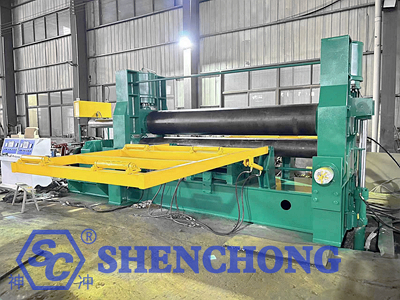
3 rolls bending machine is a basic forming equipment used to roll metal sheets into cylinders, arcs, or cones. It is one of the most common rolling machines in sheet metal workshops. So, how do you maintain it? Below is a "3 Rolls Bending Machine Maintenance Manual (Detailed and Complete Version)," suitable for workshop implementation, equipment management systems, after-sales delivery materials, and training manuals.
* Ensure rolling accuracy and rounding quality
* Extend the service life of the main roller, bearings, and hydraulic system
* Reduce the failure rate and avoid sudden shutdowns
* Ensure operational safety and equipment stability
* Lubrication priority, cleanliness is fundamental
* Preventive maintenance > Fault-based repair
* Small problems resolved overnight, major hidden dangers resolved within the shift
* Whoever operates, inspects; whoever repairs, is responsible
* Check if the main power supply and voltage are normal
* Check if the emergency stop button and foot switch are sensitive
* Check if the protective cover and limit switches are intact and effective
* Abnormal: Do not start the 3 rolls bending machine
* Oil level above 2/3 of the oil level indicator
* No leakage in oil pipes, joints, and cylinders
* Normal hydraulic oil color (not white, not emulsified)
* Oil film present in the bearing positions of the upper roller, lower roller, and side rollers
* Good lubrication of the slider and guide rails
* Dry friction → Oil must be added before starting the 3 roller bending machine.
* Roller surface free of iron filings, welding slag, and hard objects.
* Roller surface free of obvious indentations and scratches.
* Frame and bearing seat bolts are not loose.
Motor and hydraulic pump operate smoothly.
No screeching, knocking, or periodic abnormal noises.
Sheet material feed is smooth and does not deviate.
Three rollers rotate synchronously without shaking.
The rounding process is uniform, without sudden "material jumping".
Pressure gauge is stable and does not fluctuate drastically.
Oil temperature is normal (the oil tank is not hot to the touch).
If any abnormality is found: Stop the machine immediately for inspection.
Clean iron filings and scale from the roller surface.
Wipe oil stains from the slider, guide rails, and three rolls bending machine body.
Do not allow metal filings to remain overnight.
Return the upper and side rollers to the neutral position.
Unload the hydraulic pressure. Return the operating handle to the zero position.
Stop the hydraulic pump → Disconnect the main power supply. Lock the electrical cabinet. Keep the environment dry and clean.
Check the oil level daily; it's cheaper than repairing the pump.
Clean roller surface = rolling accuracy. No delays due to abnormal noises.
No compromises on oil leaks.
Forced start with insufficient oil level.
Rolling plates directly with weld slag on the roller surface.
Repeatedly operating under load with sudden stops.
Rolling of extra-thick, extra-wide, or extra-strength materials.
Unauthorized adjustment of hydraulic parameters by non-maintenance personnel.
Items | Inspection Content | Standards |
Power system | Voltage, emergency stop button | Normal and sensitive |
Hydraulic system | Oil level, oil pipes, connectors | No leakage, normal oil level |
Lubrication points | Rollers, sliders | Oil film present |
Three-roller surface | Scratches, indentations | No obvious damage |
Limiting device | Upper and lower limits | Reliable operation |
Check for abnormal noises or vibrations from the hydraulic pump.
Check for sheet material deviation during rolling.
Check for synchronized and smooth roller rotation.
Check for stable system pressure (no frequent fluctuations).
Clean iron filings and oil stains from the roller surface.
Wipe the guide rails and sliders.
Return the upper and side rollers to the center, releasing system pressure.
Disconnect the power supply and lock the electrical cabinet.
Check and tighten:
Main roll bearing seat bolts
Frame connecting bolts
Hydraulic cylinder mounting bolts
Standard:
No loosening, no signs of displacement
Check oil pipes, joints, and valve blocks
Standard: No oil leakage, no "oil dripping"
Oil pipes: No bulging or cracking
Check roll surfaces: For scratches or indentations
Permissible range: No damage affecting the rolling quality
Clean all lubrication points
Refill: Lithium-based grease #2
Key areas:
Upper roller, lower roller, side roller bearings
Slide block, guide rail
Clean or replace: Return oil filter
Check: Oil tank breather for blockage
Observe:
Hydraulic oil color and odor
If emulsification or blackening is found → add to replacement plan
Check the synchronization of left and right side rollers
Verify upper and lower stroke limits
Standard: Consistent movement, no jamming
Inspection Items:
Parallelism of upper and lower rollers
Coaxiality of three rollers
Reference Standard: ≤ 0.2 mm / m
Inspect the cylinder:
Piston rod for scoring
Seal for aging
Standard:
No creeping, no internal leakage
Inspect:
Motor mounting and alignment
Coupling wear
Cleaning: Motor cooling ducts
Recommendation: Use ISO VG46 anti-wear hydraulic oil.
Operation: Drain oil → Clean oil tank → Replace with new oil.
Requirement: Do not mix different brands of oil.
Inspect: Temperature rise, radial clearance.
Abnormalities: Noise, overheating → Replace.
Tighten terminal blocks.
Inspect contactor and relay contacts.
Clean the inside of the control cabinet.
Measure roll diameter wear
If necessary: Grind or replace rolls
Inspect:
Hydraulic pump
Relief valve, synchronizing valve
Calibrate system pressure
Inspect:
PLC/control system parameters
Safety circuits, limit devices
Backup:
Control parameters, programs
Weekly | Key Points |
Monthly | Fastening, oil leakage, roller surface |
Quarterly | Lubrication, filter element, synchronization |
Semi-annually | Precision, hydraulic cylinder, motor |
Yearly | Oil change, bearing, electrical cabinet |
Weekly | Rollers, pumps and valves, system |
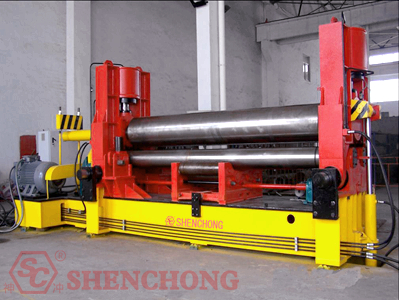
Roller surface condition
Roller shaft and bearings
Roller parallelism and coaxiality
Daily: Cleaning, visual inspection
Quarterly: Precision inspection
Yearly: Wear measurement
Remove iron filings and oxide scale from the roll surface daily.
Strictly prohibit welding slag and hard objects from contacting the roll surface.
Do not allow excessively thick or high-strength rolling.
Regularly check the wear of the roll diameter.
No indentations or scratches on the roll surface that affect rolling.
Parallelism error ≤ 0.2 mm/m.
Cornerality is normal, with no localized material chipping.
Problems | Causes | Treatment |
Not perfectly round | Rolls not parallel | Correcting the roller system |
Slippery board material | Roll surface contamination | Cleaning or lightly grinding |
Surface scratches | Hard object caught in | Grinding the roller surface |
Main bearing lubrication
Couplings, gear meshing
Temperature rise and abnormal noise
Monthly: Top up
Semi-annually: Condition check
Replace if necessary
Use lithium-based grease #2
Add grease to 1/2 to 2/3 of the bearing cavity
Avoid overfilling to prevent overheating
Smooth operation
Bearing temperature rise ≤ 40℃
No dry friction noise
Hydraulic oil
Hydraulic pump
Valve assembly, cylinder
Daily: Oil level
Monthly: Filter element
Semi-annually/Annually: Oil change
Recommended hydraulic oil: ISO VG46 anti-wear hydraulic oil
Do not mix different brands
If oil temperature consistently > 55℃, the machine must be shut down
Clear oil without emulsification
Stable system pressure
No cylinder creep or internal leakage
Phenomena | Possible causes |
Unstable pressure | Valve core contamination |
High oil temperature | Filter element blockage |
Asynchronous operation | Synchronization valve malfunction |
Piston rod surface
Seal condition
Stroke smoothness
Quarterly inspection
Immediate handling of any abnormalities
Keep piston rod clean and free from impacts
Replace seals immediately upon discovering oil leaks
Do not operate with faulty components
No surface scoring
Smooth stroke without vibration
No internal or external leakage
Control cabinet
Sensors, limit switches
Motors and frequency converters
Monthly cleaning
Semi-annual inspection
Yearly parameter backup
Keep cabinet dry and dust-free
Do not plug or unplug components while powered on.
Regularly check grounding
Secure wiring
No alarms or malfunctions
Good heat dissipation
Frame welds
Connecting bolts
Deformation
Monthly routine inspection
Annual special inspection
Focus on high-stress areas
Stop machine immediately upon finding cracks
Prohibit prolonged overload operation
Emergency stop button
Travel limit switch
Protective cover
Foot switch
Monthly functional testing
Stop the 3 rolls bending machine immediately upon failure
Do not disable without authorization
❌ Continuing production with damaged rollers
❌ Ignoring oil leaks
❌ Dry running of bearings
❌ Adjusting hydraulic valves by non-professionals
❌ Operating machine despite safety device malfunction