+86-158-9507-5134
info@shenchong.com
 EN
EN
How to evaluate the CNC hydraulic press brake quality? We should conduct a comprehensive analysis from structure, precision, system, stability to long-term operating costs.
As a core piece of equipment in sheet metal processing, the quality of a CNC hydraulic bending machine directly determines:
- Workpiece precision
- Bending consistency
- Processing efficiency
- Die life
- Automation adaptability
Long-term production costs for the enterprise. Many customers, when purchasing bending machines, often only look at "tonnage, price, and brand," but what truly determines the quality of the equipment is the overall system capability and long-term stability.
A high-quality CNC hydraulic press brake machine must not only be able to bend, but also:
- Long-term stable bending
- High-precision repeatable bending
- High-efficiency continuous bending
- Automated intelligent bending
- Low failure and low maintenance bending
Below, from the most professional industry perspective, we will systematically analyze how to evaluate the quality of a bending machine.
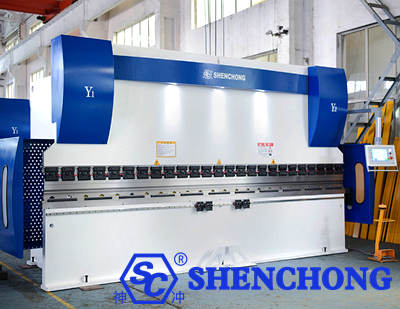
Let's first look at the core essence of hydraulic bending machines.
A bending machine is essentially: a "high-precision force control device."
It is not a simple hydraulic device.
A truly high-quality bending machine, at its core, is:
Core Competencies | Impacts |
Frame Rigidity | Deformation |
Slider Synchronization Accuracy | Whether left and right angles are consistent |
Hydraulic Stability | Long-term stability |
CNC System Algorithm | Precise compensation |
Machining Accuracy | Affects repeatability |
Electrical Stability | Prone to malfunction |
Thermal Stability | Drifting over long periods |
Dynamic Response | Stability at high speeds |
Therefore: A "good press brake bending machine" is a combination of mechanics, hydraulics, control, software, and process.
The frame is the "skeleton" of the bending machine.
If the frame is substandard:
· Inconsistent precision
· Deformation inevitable over time
· Angle deviation under heavy loads
· Huge errors at high tonnage
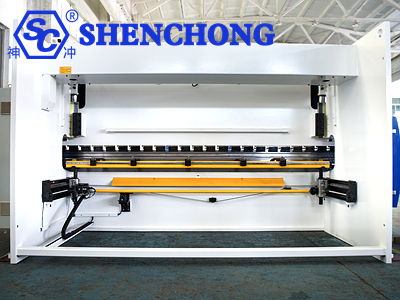
High-quality press brake machines typically employ:
· Integral steel plate welding
· Finite element analysis (FEA)
· Integral tempering treatment
· Large-scale floor-mounted milling
Good structural characteristics:
· Uniform stress
· Strong torsional resistance
· Long-term non-deformation
· No vibration at high speed
Low-end equipment:
· Thin steel plate
· Reduced reinforcing ribs
· Long-term sinking
High-end equipment:
· Thick side plates
· Thick worktable
· Thick slider
· Dense reinforcing ribs
Especially large machines:
· 4000mm and above
· 6000mm and above
Frame rigidity is extremely critical.
Excellent press brake manufacturers will:
· Integral welding
· High-temperature tempering
· Vibration aging
· Natural aging
Purpose:
· To eliminate welding internal stress.
Otherwise, After 1-2 years of equipment use:
· Precision drift
· Worktable deformation
· Slider offset
The most critical source of accuracy for a hydraulic press brake machine:
Synchronization of left and right cylinders.
Features:
· Low cost
· Simple structure
Disadvantages:
· Moderate accuracy
· Long-term wear
· Large deviation
· Not suitable for high-precision machining
Suitable for:
· Ordinary machining
· Customers with low budgets
Currently the mainstream high-end solution.
Features:
· Dual linear encoder closed-loop control
· Dual servo proportional valves
· CNC real-time correction
Advantages:
· High accuracy
· Good repeatability
· Dynamic stability
Judgment Criteria:
Items | Excellent Standard |
Repeatability accuracy | ±0.01mm~0.02mm |
Left and right synchronization accuracy | ≤0.02mm |
Long-term stability | High |
High-speed stability | Excellent |
The hydraulic system is the "heart" of a bending machine.
Many machines:
· Work well initially
· Precision decreases after one year
Root cause: Poor quality hydraulic system.
International high-end brands include:
Components | Brands |
Hydraulic valve | Bosch Rexroth |
Oil pump | SUNNY / Voith |
Seal | NOK / Parker |
Oil pipe | EMB |
Proportional valve | Rexroth |
Oil Temperature Influences:
· Viscosity
· Pressure
· Response Speed
Poor Equipment:
· Drift after continuous operation
Good Equipment:
· Stable oil temperature
· Stable accuracy over long periods
High-end machines typically feature:
· Air cooling
· Water cooling
· Temperature control system
Judgment Criteria:
· Oil leakage
· Are the joints properly installed?
· Is the piping neat and organized?
Excellent Equipment:
· Professional piping layout
· Virtually no leaks
The CNC system determines:
· Ease of use
· Precision
· Automation capability
· Efficiency
Industry mainstream:
Brands | Country | Features |
Delem | Netherlands | Global mainstream |
ESA | Italy | High-end |
Cybelec | Switzerland | High precision |
SC EL | China | Cost-effective |
Excellent systems possess:
· Angle Programming
· Graphical Programming
· Automatic Compensation
· Multi-Step Bending
· 3D Simulation
· Interference Detection
· Automatic Unfolding
· Automatic Calculation of Bending Sequence
· Offline Programming
· Network Connectivity
Truly High-End Systems:
· Quick Learning
· Intuitive Operation
· Stable and Lag-Free
Low-End Systems:
· Logically Incoherent
· Slow Response
· Prone to Crashing
Many customers overlook:
Machining accuracy determines the upper limit of the equipment.
Impact:
· Slider running stability
· Long-term wear
Excellent Standards:
· High-precision gantry machining
· One-time clamping completion
Including:
· Hydraulic cylinder coaxiality
· Worktable parallelism
· Guide rail perpendicularity
Any deviation will lead to:
· Angle deviation
· Taper
When bending long workpieces, the worktable will inevitably deform. This will cause the center angle to deviate. Good equipment must have a compensation system.
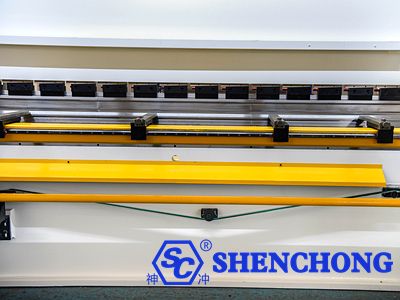
· Low cost
· Good stability
· High automation
· Higher precision
Excellent Compensation:
· Consistent center and end angles
· Small error for long workpieces
· Over 4000mm
· Thick stainless steel plates
· Large tonnage equipment
The compensation system is extremely critical.
Modern High-End Bending Machines Extensive Use of:
· Servo Main Motor
· Hybrid Electric System
- Greater Energy Efficiency
Energy saving of 30%~70%.
- Quieter Operation
Significantly reduced noise.
- Faster Response
High speed and high precision.
- Lower Oil Temperature
Stronger long-term stability.
On-site testing is mandatory when purchasing a hydraulic bending machine.
Same workpiece:
Bend 10 times consecutively.
Observation:
Are the angles consistent?
Are the dimensions consistent?
Bending:
3000mm
4000mm
Observation:
Is there any deviation in the middle angle?
Are both ends consistent?
Test:
Thin plate
Thick plate
Stainless steel
Observation:
Is it stable?
Is the springback well controlled?
Continuous high-speed operation:
Observation:
Is there any vibration?
Is there any abnormal noise?
Is there any overheating?
Many machines: Excellent precision when first purchased.
After 6 months:
· Increased deviation
· Oil leakage
· Drifting
Truly good machines: Remain stable for 5-10 years.
· After continuous operation: Frame temperature rises.
· Poor machines: Severe precision drift
· High-end machines: Strong thermal compensation capability
At high speeds, Low-end machines will:
· Vibrate
· Resonate
High-end machines:
· Smooth operation
· High dynamic precision
Excellent hydraulic press brake machine manufacturers possess:
· Large gantry machining center
· Floor-type boring machine
· Laser interferometer
· Coordinate measuring machine
Observe:
· Are the pipes neat and orderly?
· Are the cables standardized?
· Are the welds uniform?
Details determine hydraulic press brake quality.
Focus on:
· Major client cases
· Automation cases
· Export cases
Especially important:
Automotive, aerospace, and heavy industry clients have the highest requirements.
The truly important factors are:
· Response speed
· Spare parts capability
· Remote diagnostics
· Process support
Class/Tier | Features |
Low-end | Usable, but with average accuracy |
Mid-range | Stable accuracy, suitable for routine production |
High-end | High speed, high precision, automation |
Top-tier | Intelligent + flexible manufacturing + Industry 4.0 |
Mandatory Items:
· Frame Thickness
· Welding Process
· Tempering Treatment
· Guide Rail Machining
· Hydraulic Brand
· Oil Leakage
· Temperature Rise Control
· CNC Brand
· Closed-Loop Operation
· Automatic Compensation
· Repeatability
· Consistency for Long Workpieces
· High-Speed Stability
· Robot Support
· Networking Support
· MES Support
Truly excellent CNC hydraulic press brake machines typically possess the following characteristics:
✅ High-rigidity frame
✅ Electro-hydraulic synchronous closed-loop system
✅ High-precision machining and assembly
✅ Strong long-term stability
✅ Minimal thermal deformation
✅ Stable high-speed operation
✅ Precise automatic compensation
✅ Easy maintenance and low failure rate
✅ Strong automation compatibility
Future industry trends:
More energy-efficient and faster.
Automatic workpiece recognition.
Robot loading and unloading.
MES/ERP interoperability.
Lights-out factory.
Evaluating the hydraulic press brake quality cannot be based solely on factors like tonnage, price, or appearance. A comprehensive assessment must be made, considering multiple dimensions including structure, precision, stability, control system, hydraulic system, mold compatibility, processing capacity, reliability, and after-sales service.
A truly good bending machine should be characterized by long-term stability, controllable precision, easy adjustment, low failure rate, convenient maintenance, and long lifespan, not just a beautiful prototype.
Judging the quality of a bending machine is not simply about "tonnage" or "price."
The true value of equipment lies in "long-term stable precision + system control capabilities + overall manufacturing quality + after-sales service capabilities."
Because an excellent CNC hydraulic press brake is not just a piece of equipment, but the core foundation of a company's production capacity for the next 10 years or more.