+86-158-9507-5134
[email protected]
 EN
EN
SHENCHONG 130ton CNC hydraulic bending machine is a typical medium-sized, high-precision, and general-purpose sheet metal bending machine in the sheet metal processing industry. It is typically configured with 130T/3200mm, meaning a rated bending force of approximately 1300 kN and a maximum bending length of approximately 3200mm. It can cover a wide range of sheet metal processing needs in industries such as machinery manufacturing, steel structures, chassis and cabinets, ventilation equipment, construction machinery, automotive parts, and electrical equipment.
Currently, 130-ton models on the market include traditional synchronous hydraulic structures, as well as electro-hydraulic synchronous and servo-electro-hydraulic hybrid solutions. The CNC axes can be expanded from the basic Y1/Y2/X to 4+1, 6+1, or even 8+1 axes. For example, some 130T×3200 models use a Y1/Y2/X/R+V axis configuration, while more advanced configurations can add Z1/Z2 back gauge axes.
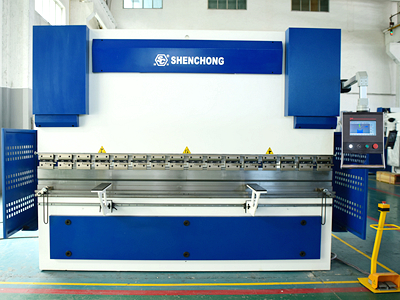
SC 130 ton CNC hydraulic press brake is also commonly referred to as:
- 130T CNC press brake
- 130ton hydraulic press brake
- 130T CNC Press Brake
- WE67K-130T/3200
- WDK-130T/3200
- 130T×3200 CNC hydraulic press brake
Where:
130T represents the rated nominal pressure of the equipment, which is approximately 130 tons, or about 1300kN.
3200mm represents the effective bending length of the press brake's worktable, which is typically 3200mm.
It is important to note:
130 tons does not mean that the machine can only bend workpieces weighing 130 tons, but rather that the bending system can generate a maximum rated bending force of approximately 1300kN.
130T×3200 is a very common combination in the market. The publicly available product specifications include a 1300kN capacity, a 3200mm diameter, a throat depth of approximately 400mm, and a slider stroke of approximately 200mm.
Different manufacturers, hydraulic systems, control systems, and structural designs will result in different parameters. Therefore, the following data is more suitable as a selection reference range than a uniform standard for all 130T equipment.
Item | Typical Parameters |
Nominal Pressure | 1300 kN / 130T |
Maximum Bending Length | 3200mm |
Column Spacing | Approx. 2600~2700mm |
Throat Depth | Approx. 400~410mm |
Slider Stroke | Approx. 200mm |
Maximum Opening Height | Approx. 420~520mm |
Table Height | Approx. 750~850mm |
Table Width | Approx. 180~250mm |
Y1/Y2 Axis | Standard Configuration |
X-Axis | Standard Configuration |
R-Axis | Optional/Common |
Z1/Z2 Axis | Advanced Configuration Optional |
V-Axis Compensation | Optional |
Backgauge Stroke | Typical Approx. 500~600mm |
Rapid Descending Speed | Approx. 160~220mm/s |
Working Speed | Approx. 8~18mm/s |
Return Speed | Approx. 130~200mm/s |
Main Motor | Approx. 7.5~11kW |
Equipment Weight | Approx. 7.5~9.5 tons |
Control System | EL15T, ESA, Delem, Cybelec, etc. |
Hydraulic System | Dual-cylinder synchronous hydraulic |
Safety System | Laser protection/photoelectric protection optional |
For example, in the publicly available data for the 130T×3200 equipment, we can see typical configurations such as 1300kN, 3200mm, 2700mm column spacing, 200mm stroke, approximately 480mm opening height, and 400-410mm throat depth.
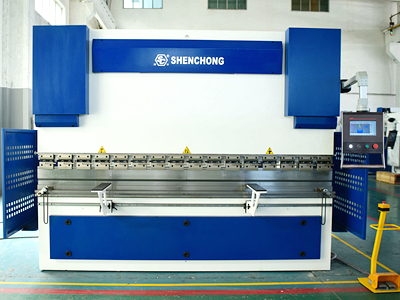
The 130T×3200 is actually a very representative medium-sized bending machine specification.
It addresses the market demand where:
Workpieces cannot be too small, but buyers don't want to purchase large equipment weighing 200 tons or even 300 tons.
The 3200mm working length can cover a wide range of standard sheet metal parts.
For example:
- Electrical control cabinets
- Distribution boxes
- Chassis and cabinets
- HVAC ducts
- Steel structure connectors
- Construction machinery covers
- Equipment housings
- Shelves
- Doors
- Metal frames
- Automotive parts
- Agricultural machinery parts
- Stainless steel equipment housings
- Kitchen equipment
- General mechanical parts
Therefore, the 130Ton×3200mm can generally be understood as: a "general-purpose" bending machine that balances bending capacity, processing length, precision, equipment investment, and applicability.
This is one of the most easily misunderstood questions by users.
It's not accurate to simply say that 130 tons equals a certain number of millimeters of bending capacity.
Actual bending capacity is affected by the following factors:
- Material tensile strength
- Plate thickness
vBending length
- V-groove width
- Bending method
- Bending radius
- Die condition
- Workpiece structure
- Whether it's a full-length bend
For example, a 130Ton×3200mm bending machine has strong versatility for common low-carbon steel thin plates, but the actual processable thickness must be determined through bending force calculations.
Some market information describes the 130T×3200 CNC press brake machine as suitable for processing carbon steel, stainless steel, and aluminum plates in the millimeter range, but different manufacturers use different V-grooves and calculation methods. Therefore, the advertised "maximum thickness" cannot be directly taken as a guaranteed value for all working conditions.
The 130T×3200 machine can cover a large number of common sheet metal parts.
It doesn't have the limited processing capacity of small bending machines, nor the large investment and floor space required for 300T or 400T machines.
With a CNC system, the following can be achieved:
Programming → Positioning → Bending → Return → Next Process
Reducing manual measurement and scribing.
Traditional manual bending is prone to:
- Operator differences
- Positioning errors
- Angle errors
- Inconsistent repeated positioning
CNC bending machines significantly reduce these problems.
By adding:
R-axis
Z1/Z2
V-axis
Automatic compensation
More complex sheet metal products can be processed.
Skilled operators are still important, but the CNC system can transform much of the experience into:
Programs + Parameters + Mold Library + Material Library
Thus reducing reliance on a single highly skilled operator.
This is the primary application scenario.
Used for:
- Electrical cabinets
- Distribution boxes
- Control cabinets
- Chassis
- Cable trays
Used for:
- Connecting plates
- Reinforcing plates
- Supporting components
- Bending profiles
- Steel structure accessories
Can process:
- Air ducts
- Flanges
- Air valves
- Ventilation equipment housings
- Air conditioning equipment sheet metal parts
For example:
- Excavator body panels
- Machinery guards
- Supporting plates
- Connecting components
Suitable for:
- Brackets
- Reinforcing plates
- Body sheet metal parts
- Chassis parts
The 130Ton cnc hydraulic bending machine can be used for large-scale stainless steel sheet metal processing.
However, the yield strength and springback of stainless steel are generally higher than those of ordinary carbon steel, therefore:
- A more reasonable V-groove
- A larger bending force reserve
- More accurate angle compensation
- A better die
This is a crucial question to consider during the procurement process.
Configurations | Recommended Scenarios | Cost-effectiveness |
3 axis | Simple Workpieces | ★★★★★ |
4+1 axis | General Sheet Metal Workpieces | ★★★★★ |
6+1 axis | Complex, Multi-Specification Workpieces | ★★★★☆ |
8+1 axis | High-End Flexible Manufacturing | ★★★★☆ |
If you primarily produce standard box-shaped components, the following options are generally sufficient: Y1/Y2/X/R.
If your products are complex, we recommend a 6+1 axis system, especially independent Z1/Z2 control, which is very helpful for complex workpieces.
If you are building an automated bending unit, we suggest considering: high-axis CNC + robotic loading and unloading + online angle detection.