+86-158-9507-5134
info@shenchong.com
 EN
EN
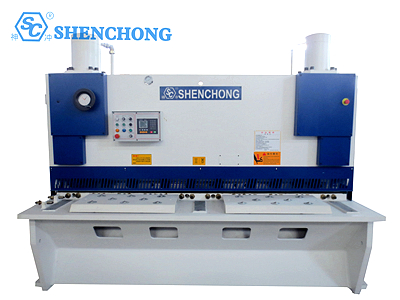
SC 20mm plate shearing machine typically refers to a heavy-duty hydraulic guillotine shear with a maximum shearing thickness of 20mm. It is mainly used for straight shearing of carbon steel plates, low-alloy steel plates, and some stainless steel plates. Common specifications include 20×2500 mm, 20×3200 mm, 20×4000 mm, 20×5000 mm, and 20×6000 mm.
For 20mm thick steel plates, the equipment falls into the medium-to-heavy-duty plate processing range, placing high demands on frame rigidity, hydraulic system, blade strength, clamping capacity, shearing gap, and back gauge accuracy.
The actual maximum thickness must also be determined in conjunction with the material's tensile strength. For example, some machines can shear 20mm with a material strength of approximately 450 N/mm², while the maximum thickness may drop to approximately 13mm when dealing with high-strength materials of approximately 700 N/mm².
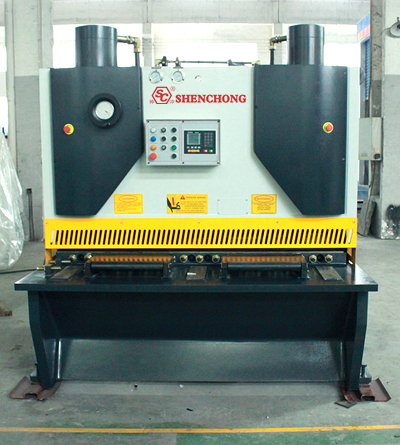
The biggest difference between a 20mm plate shearing machine and ordinary thin plate shearing machines (6mm, 8mm, 10mm, etc.) is its significantly stronger heavy-duty capacity.
Shearing 20mm steel plates requires a large shearing force. Therefore, the frame must possess sufficient:
- Bending strength
- Torsion stiffness
- Fatigue resistance
- Tool holder support capacity
- Hydraulic cylinder installation strength
Typically, a one-piece welded steel plate structure is used, followed by annealing, shot peening, or other stress-relief processes, and key mounting surfaces are machined using large machine tools.
A high-rigidity frame can reduce the following during shearing:
- Frame deformation
- Tool holder misalignment
- Shearing plate angle error
- Shearing size error
- Abnormal blade wear
Some heavy-duty 20mm CNC shearing machines even use a single clamping operation to complete the key frame machining, reducing clamping errors.
Shearing 20mm plates requires a large instantaneous shearing force. Therefore, the hydraulic system must have sufficient pressure, flow rate, and stability.
A typical hydraulic system includes:
- Hydraulic pump
- Main hydraulic cylinder
- Pressure cylinder
- Solenoid valve assembly
- Hydraulic lines
- Oil tank
- Pressure gauge
- Hydraulic filter
- Hydraulic oil cooling system
- Hydraulic safety protection device
During operation, the hydraulic system first drives the pressure device to fix the sheet metal, and then drives the upper blade beam to complete the shearing.
Some equipment uses multiple independent pressure cylinders to clamp the sheet metal in sections, which is particularly valuable for thick plates, long plates, and plates with uneven surfaces.
For 20 mm thick plates, relying solely on the weight of the plate itself for fixation is insufficient.
Therefore, shearing machines typically have multiple hydraulic pressure points.
Their functions include:
During shearing, the sheet metal is subjected to lateral and vertical forces from the blades. Insufficient fixation can easily lead to displacement.
Stable clamping of the sheet metal reduces dimensional errors.
The impact force generated during the shearing of thick plates is large; proper pressure can reduce sheet metal vibration.
Once the sheet metal is stabilized, the shearing process between the upper and lower blades becomes smoother, reducing problems such as burrs and tears.
Below is a set of common industry reference parameters. Specifications may vary between manufacturers, structures, and control systems. Therefore, the actual purchase should be based on the specific equipment technical agreement.
Item | 20×2500 | 20×3200 | 20×4000 | 20×6000 |
Maximum shearing thickness | 20 mm | 20 mm | 20 mm | 20 mm |
Maximum shearing length | 2500 mm | 3200 mm | 4000 mm | 6000 mm |
Reference material strength | ≤450 MPa | ≤450 MPa | ≤450 MPa | ≤450 MPa |
Shearing angle | 0.5-3° | 0.5-3° | 0.5-3° | 0.5-3° |
Back gauge range | 800-1000 mm | 800-1000 mm | 800-1000 mm | 1000 mm |
Control method | NC/CNC | NC/CNC | NC/CNC | NC/CNC |
Main motor | 30 kW | 30-37 kW | 30-45 kW | 55 kW |
Shearing speed | 5-10 times/min | 5-10 times/min | 4-10 times/min | 4-6 times/min |
Applicable positioning | Medium-thick plate | Medium-thick plate | Heavy plate | Extra-long heavy plate |
The specific 20 mm shearing machine models on the market vary considerably. For example, publicly available specifications show that the 20×2500/3200 model has a main motor of approximately 30 kW, while the 20×6000 model may reach 55 kW. Heavy-duty CNC 20 mm × 4100 mm machines also use a 45 kW main drive configuration.
This is the most commonly processed material.
For example:
Q235
Q275
Ordinary structural steel
Construction steel plate
General low-carbon steel plate
If the equipment is rated for a maximum shearing capacity of 20 mm, it is usually calibrated based on a specified material strength.
Can process:
Q355
Some low alloy structural steel
Engineering machinery steel
However, as the material strength increases, the actual maximum shearable thickness decreases.
20 mm plate shearing machine can also be used for stainless steel processing, but special attention is needed:
"20 mm shearing machine" does not mean "can cut 20 mm stainless steel".
Stainless steel generally has higher tensile strength and work hardening tendency than ordinary carbon steel. Therefore, the actual stainless steel shearing capacity of the equipment is usually lower than that of carbon steel.
For example, some publicly available parameters for 20 mm class equipment show a maximum thickness of 20 mm for materials with approximately 450 N/mm², while the maximum thickness drops to approximately 13 mm for materials with 700 N/mm².
Therefore, the following must be provided when purchasing: Material name + Thickness + Tensile strength + Shearing length.
Many customers simply say, "I need a 20mm plate shearing machine." This is far from sufficient.
At least the following parameters need to be determined:
Ordinary carbon steel or stainless steel?
Materials with 450 MPa and 700 MPa have completely different equipment requirements.
For example:
2500 mm
3200 mm
4000 mm
5000 mm
6000 mm
If only a few dozen sheets are cut per day, the equipment configuration requirements will be completely different from those cut into hundreds of sheets per day.
If the dimensions change frequently, NC/CNC is recommended.
If the sheet material is large and heavy, consider: Front feeding system + automatic loading + shearing machine + automatic palletizing.
If processing stainless steel, the maximum thickness should be determined in advance, rather than purchasing directly based on the capacity for 20 mm carbon steel.